The Home Gym Mistake That Forces You Back to a Commercial Gym Within a Year
A lot of home gym builds look complete on day one but quietly have a strength ceiling built into them, one that gets hit within months for anyone training consistently. The mistake is buying for current strength instead of near-future strength.

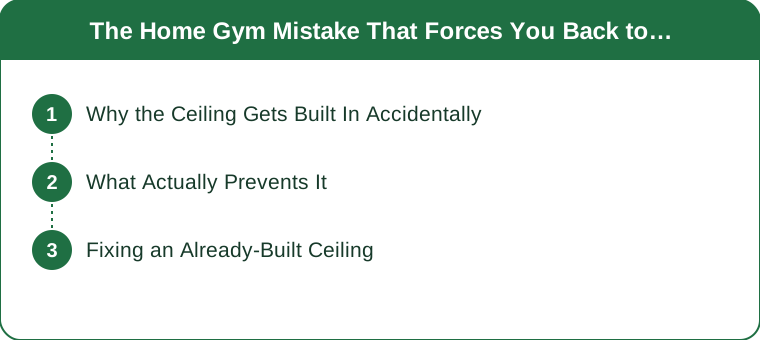
Why the Ceiling Gets Built In Accidentally
The buying pattern: the the-fixed-dumbbell-set-trap (buying a fixed set of dumbbells sized for current strength levels, which becomes a hard ceiling the moment progressive overload catches up to the heaviest pair), the the-underestimating-progress-speed (most people underestimating how quickly strength increases in the first six to twelve months of consistent training, which is exactly when a fixed equipment ceiling gets hit), the the-budget-front-loading-issue (spending the full equipment budget on a complete-looking setup upfront, leaving no room to add capacity once the ceiling is reached without a second full purchase).

What Actually Prevents It
The smarter setup: the the-adjustable-dumbbells-tradeoff (adjustable dumbbells costing more upfront per pair than a basic fixed set but covering a far wider strength range, which is usually the better value once the full progression is accounted for), the the-resistance-band-supplement (resistance bands adding a genuinely wide, cheap range of resistance as a supplement to free weights, extending capacity without a large equipment purchase), the the-plan-for-a-year-out-rule (sizing initial equipment purchases for projected strength six to twelve months out rather than current strength, based on realistic beginner or intermediate progression rates).
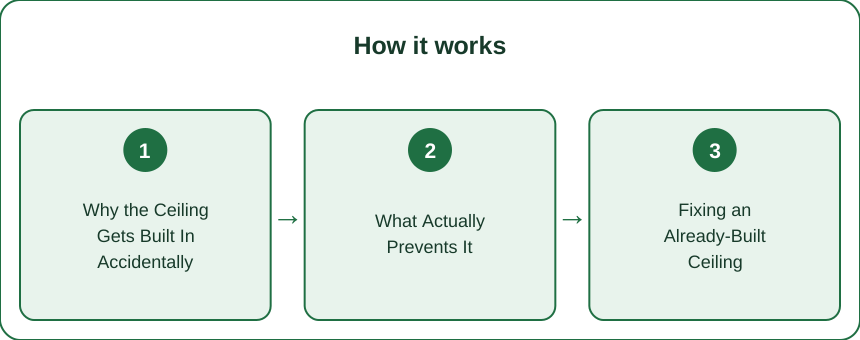
Fixing an Already-Built Ceiling
The retrofit options: the the-add-a-barbell-and-plates-option (adding a barbell and a modest plate set being one of the most cost-effective ways to extend a home gym’s range once fixed dumbbells are maxed out), the the-resell-and-upgrade-path (reselling an outgrown fixed dumbbell set to fund an adjustable pair being a reasonable path if the ceiling was already hit before this was accounted for), and the frame (buying for projected strength a year out, not current strength, is what prevents a home gym from forcing a return to a commercial gym)).
A lot of home gym setups look complete on day one but have a strength ceiling quietly built in, one that gets hit within months for anyone training consistently — the most common cause is buying a fixed set of dumbbells sized to current strength, without accounting for how quickly strength typically increases in the first six to twelve months of consistent training. Adjustable dumbbells cost more upfront per pair but cover a far wider strength range, and resistance bands add cheap, wide resistance as a supplement without a large purchase. The fix, whether planning from scratch or retrofitting an already-maxed setup, is sizing equipment for projected strength six to twelve months out rather than current strength, or adding a barbell and modest plate set once fixed dumbbells are maxed. The Home Gym Mistake That Forces You Back to a Commercial Gym Within a Year is really a buying-for-today problem, not a space or budget problem.
See It in Motion
Seen here: High Waist Yoga Leggings with Side Pockets — shop it on bubblelime.com
Keep Reading
This article is for general informational and styling purposes only. Fit, sizing, and product availability may vary.