The Complete Guide to Moving a Home Gym From the Garden to Indoors
Quick Answer: Plan the indoor move before you need it. Measure ceiling height and floor loading first, then solve noise, then flooring, then storage. Most failed indoor moves fail on noise or on the setup-teardown burden, not on space. If you can leave equipment out and use it without disturbing anyone, the habit survives the season; if either of those fails, it usually does not.
This is general information, not medical advice.

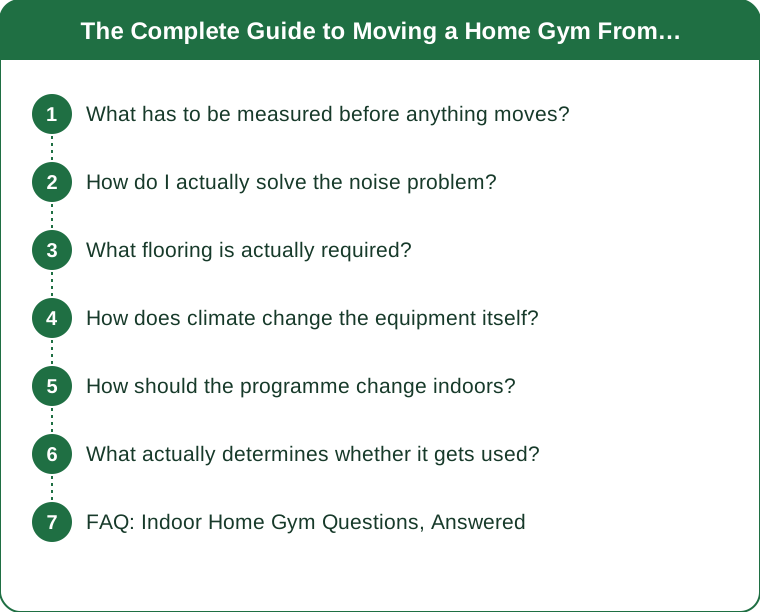
What has to be measured before anything moves?
Ceiling height, standing and overhead. Measure your reach with a plate or bar overhead, plus at least 30cm of clearance. Standard ceilings around 240cm are marginal for overhead pressing for many people, and genuinely restrictive for anyone over about 175cm.
Jumping clearance is separate and larger. Any jump, box step or skipping needs substantially more headroom than pressing does. If the ceiling rules those out, the programme has to change with the room.
Floor loading is the one people skip. Upper floors in most homes are designed for distributed household loads, not for concentrated point loads from a rack plus loaded bar plus a person. Ground floor or a concrete slab is the safe default; anything above that with heavy equipment is worth a professional opinion rather than a guess.
Doorway and stair access constrains what can move at all. A 7-foot bar does not go round a tight landing, and a rack that assembles in a garage may not fit through an internal door assembled. Measure the route, not just the destination.
Power and lighting. A treadmill or an air bike wants its own circuit rather than sharing with a household ring, and a room lit by a single overhead bulb is a room people stop using in November. Both are cheap to solve in advance and expensive to discover in use.
And the honest one: measure the space you can commit to permanently. A gym that has to be assembled each time is a gym that gets used for about three weeks.
Measure in the room, with the equipment, before you commit. Tape the rack footprint onto the floor and walk around it. A rack that fits on paper frequently leaves 40cm of walkway on one side, which is the difference between a room you use and a room you edge around.
Account for the bar in every direction. A 220cm bar needs clearance at both ends for loading plates, which is roughly 80cm more than the rack footprint suggests. This is the most common measuring error in the whole move and it is discovered on assembly day.
How do I actually solve the noise problem?
Impact noise travels through structure, not through air, which is why closing a door does almost nothing for a dropped dumbbell. Solving it means decoupling the load from the floor.
Layered flooring is the working answer. A dense rubber mat over a plywood sheet over an underlay spreads and absorbs impact far better than rubber alone. Thicker single mats are less effective than thinner layered systems.
Change the movements before buying more mats. Controlled lowering instead of dropping, dumbbells over barbells, and paused reps instead of explosive ones cut noise more than any material.
Time it around the household. Most noise complaints are about timing, not volume. A 6am session with a rack is a different problem from the same session at 7pm.
Cardio equipment is the underestimated offender. Treadmill impact and air bike fan noise both carry through a building, and both are worse on upper floors. A rower on a mat is generally the quietest cardio option available.
Tell the neighbours before you start, if you share walls. It converts a complaint into a conversation and it costs nothing.
If you rent, check the lease. Many prohibit heavy equipment above ground floor, and finding out after a floor is damaged is expensive in a way that is entirely avoidable.
What flooring is actually required?
Match the flooring to the heaviest thing that will hit it, not to the average.
For bodyweight, bands and light dumbbells, a good exercise mat over the existing floor is sufficient.
For moderate dumbbells and kettlebells, 15mm to 20mm rubber tiles under the working area protect both the floor and the equipment.
For a rack and barbell work, a full platform is the correct answer: plywood base with rubber over the loading zone. It spreads the load, protects the subfloor, and gives the bar a consistent surface.
Protect the perimeter as well as the centre. Most floor damage happens when equipment is moved or set down at the edges, not during the lift.
Do not put rubber directly onto untreated wood in a humid room. Moisture gets trapped underneath and damages the floor over a winter. A moisture barrier layer solves it.
Consider what you will want back. If this is a room you will one day return to normal use, choose interlocking tiles you can lift rather than anything adhesive.

How does climate change the equipment itself?
Humidity is the main enemy of steel. Bars, plates, racks and adjustable dumbbells all rust, and an unheated indoor room in winter can be more humid than the garden shed was in July.
Condensation is worse than ambient damp. Cold metal in a room that warms up quickly attracts condensation directly onto the surface. Bringing equipment in and letting it acclimatise for a day before use avoids the worst of it.
A dehumidifier is the single most effective purchase for a garage or unheated indoor gym. Keeping relative humidity below about 60 percent prevents most rust.
Wipe bars down after use and oil the knurling occasionally. Three minutes a month prevents a bar that cannot be salvaged.
Rubber and foam degrade in cold. Mats become brittle, and rubber-coated dumbbells can crack if dropped when very cold. Let equipment warm before hard use.
Electronics dislike cold and damp both. Treadmill and bike consoles are the first things to fail in an unheated space, so those are the pieces that most justify an indoor, heated location.
How should the programme change indoors?
Accept the ceiling and design around it. Landmine presses, incline work and half-kneeling variations all replace overhead pressing without a compromise in stimulus.
Substitute for the jumping. Trap bar work, kettlebell swings, and fast concentric lifting all develop power without leaving the floor.
Use the smaller footprint deliberately. Unilateral work — split squats, single-leg RDLs, single-arm pressing — needs less space, less equipment and less noise, and most people are underdoing it anyway.
Shorter, more frequent sessions suit a home setup. The commute is zero, so four 35-minute sessions fit a home gym far better than two 70-minute ones.
Plan for winter cardio specifically. Outdoor running and cycling drop off as the weather turns, and a home gym with no cardio option leaves a real gap. A rower or a bike is the piece most people wish they had bought before December rather than in January.
Keep the warm-up longer in a cold room. A body starting at 15 degrees needs more preparation than one starting at 24, and most home-gym strains happen in the first two months of cold weather.
What actually determines whether it gets used?
Whether it stays set up. This is the single biggest predictor. Every step between deciding to train and starting to train reduces the probability of the session.
Whether the room is warm enough to enter. A gym at 10 degrees is a gym you visit in April. Even a small heater run for 15 minutes beforehand changes the decision entirely.
Whether the lighting is decent. Poor lighting makes a space feel unpleasant in a way people rarely identify but consistently respond to. This matters far more as evenings darken.
Whether it looks like a gym rather than a storage room. Rooms with a mixed purpose gradually become storage. The equipment loses, every time.
Whether there is a plan on the wall. A written programme visible in the room removes the decision about what to do, which is the second-largest barrier after setup.
Whether anyone else can hear you. Sessions that require permission from the household are sessions that get skipped, and this is the constraint people are least willing to name.
Whether the equipment you moved is the equipment you actually use. Most home gyms have one or two pieces doing 80 percent of the work and several doing none. The move indoors is the natural moment to be honest about which is which, because space is suddenly the binding constraint rather than an abstraction.
Whether it has a door. A room you can close changes the psychology substantially — it separates training from the household, it contains the noise, and it stops the space being crossed by other people mid-session. Where a door is not possible, a screen or a rack acting as a partial divider does a surprising amount of the same work.
Whether the first session in the new space goes well. People generalise heavily from a first experience. Set the room up completely, plan an easy session, and do it on a day you feel good. A bad first session in a new space is disproportionately expensive.
FAQ: Indoor Home Gym Questions, Answered
Can I put a squat rack on a first floor?
Sometimes, but not on assumption. Concentrated loads on a suspended floor are a structural question, and the answer depends on joist span, direction and condition. Get a professional opinion before, not after.
How much space does a functional home gym actually need?
A usable barbell setup needs roughly 2.5m by 2.5m plus ceiling height. Dumbbells, bands and bodyweight work fit comfortably in about 2m by 2m.
Is a garage better than a spare room?
A garage usually wins on floor loading, ceiling height and noise, and loses on temperature and humidity. A heated, dehumidified garage is the best of both and is worth the setup cost if you train year-round.
What is the first thing to buy for the move?
Flooring. It protects everything else, it is the thing people postpone, and it is the thing that decides whether the room is usable at all.
How do I stop the room becoming storage?
Give it a physical boundary — a rug, a mat edge, a rack line — and keep that area clear as a rule. Rooms without a defined training zone lose it within a couple of months.
Should I sell the outdoor setup or keep both?
Keep the equipment and move it; sell only the things that duplicate. Most people who sell in October regret it by May, and secondhand equipment sells at its worst price in autumn and its best in January.
Is a shed or outbuilding a reasonable middle option?
It solves floor loading, ceiling height and noise in one move, and it introduces the hardest version of the climate problem. An insulated, dehumidified outbuilding is genuinely excellent; an uninsulated one is a summer gym with extra steps.
How long does the move actually take?
Budget a weekend for the physical move and two weeks of small adjustments afterwards. The layout you choose on day one is almost never the one you settle on, so avoid anything permanent for the first month.
TL;DR:
- Measure ceiling height, floor loading and the access route before moving anything.
- Noise is a structural problem: layer the flooring and change the movements, not just the mats.
- Match flooring to the heaviest impact — a full platform for barbell work, tiles for dumbbells.
- Humidity and condensation, not cold, are what destroy equipment indoors; a dehumidifier is the best buy.
- Redesign the programme around ceiling limits and add a cardio option before December.
- Usage is decided by whether it stays set up, whether the room is warm, and whether it is lit.
The move indoors is the moment most home gyms either become a year-round habit or become storage.
This is general information, not medical advice.
See It in Motion
Seen here: UPF 50+ Short Sleeve Rashguard Swim Shirt — shop it on bubblelime.com
Keep Reading
This article is for general informational and styling purposes only. Fit, sizing, and product availability may vary.