The Real Cost of a Home Gym: What 12 Months of Building One Actually Taught Me
Quick Answer: A functional home gym built over 12 months in phases typically runs $800-$2,500 total depending on flooring and rack choice — the budget-blowing mistake is buying everything at once instead of phasing purchases around what you actually use first.
Every home gym budget breakdown online shows the finished setup and a suspiciously round total. What they skip is the middle: the months where you bought the wrong thing, returned it, and the actual dollars-per-month reality of building a gym without going into debt over dumbbells.

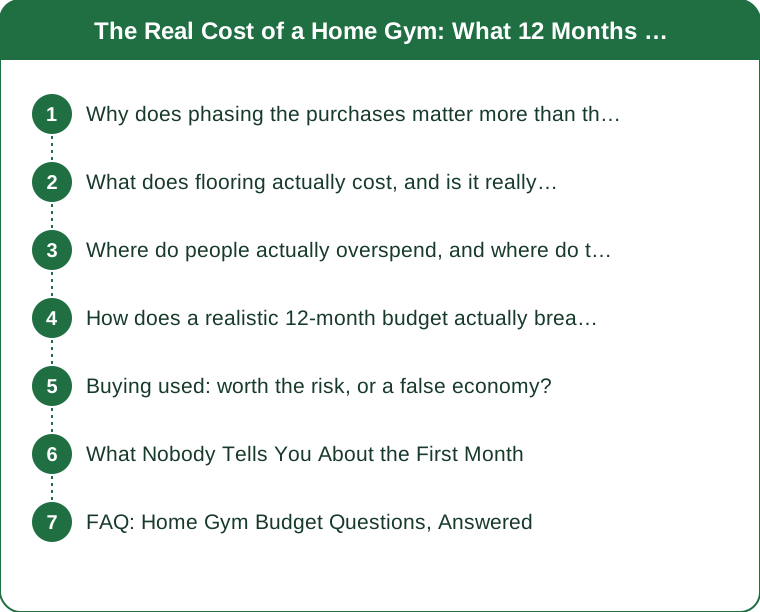
Why does phasing the purchases matter more than the total budget?
Buying a full home gym in one order means committing $1,500+ before you know your actual training habits, equipment preferences, or how much space you really have once furniture is moved. Phasing over 3-4 months lets each purchase inform the next — you find out you hate the adjustable dumbbells’ click-lock mechanism before you’ve also bought a rack that assumes you’re using them.
Across a 12-month build, spreading purchases also matters financially: $150-200 a month is a manageable line item; $1,800 upfront is a decision most budgets flinch at, which is exactly why so many home gym plans stall at ‘someday.’ The phased approach isn’t slower in outcome — it’s slower in spending, which is the actual barrier for most people.
A reasonable phase structure: Month 1-2 covers flooring and one flexible tool (kettlebell or adjustable dumbbells). Month 3-5 adds a bench and a second resistance tool. Month 6-9 is where a rack or barbell setup enters, once you know you’re actually using the space consistently. Month 10-12 is refinement — the accessory you now know you’re missing, not a guess from day one.
What does flooring actually cost, and is it really necessary first?
Interlocking rubber tiles for a 10x10 space run $150-350 depending on thickness, and this is the one line item nearly every home gym guide agrees should come first — not because it’s exciting, but because it protects the actual floor underneath and changes how confident you feel dropping weight.
Budget tip that saves real money: buy 3/4-inch tiles only under where weights will actually land (a 6x6 zone), and cheaper thinner mats for the rest of the footprint. That single decision alone can cut $100-150 off the flooring phase without any functional loss, since the thin mat area is for standing and stretching, not impact.
Where do people actually overspend, and where do they underspend?
Overspend zone: racks and multi-gyms bought in month one, before training consistency is proven. A $600 rack sitting mostly idle because the person trains with dumbbells 80% of the time is the single most common home-gym regret in the community threads and forums where people track this honestly.
Underspend zone: adjustable dumbbells and resistance bands, which cost less than people expect ($200-400 for a solid adjustable pair covering 5-50lbs) and cover more training variety per dollar than almost anything else in a home gym. Bands specifically are the most underrated purchase — under $40 for a full set covering assistance work, mobility, and light resistance training that a rack can’t replicate.
The pattern across a full year: the equipment people use daily costs the least, and the equipment bought out of aspiration (that they use monthly, if that) costs the most.

How does a realistic 12-month budget actually break down?
Based on a phased build tracked over a full year:
- Months 1-2 (flooring + first tool): $350-500
- Months 3-5 (bench + second resistance tool): $250-450
- Months 6-9 (rack or barbell system, if training warrants it): $400-1,200
- Months 10-12 (accessories — mirror, storage, small tools): $150-350
Total range: $1,150-2,500, with the lower end being entirely achievable for someone who sticks with dumbbells, bands, and bodyweight and skips the rack phase entirely — which, honestly, covers most home training needs for the first year.
Buying used: worth the risk, or a false economy?
Used equipment, sourced from local marketplace listings after New Year’s resolution gyms clear out (mid-to-late January is peak supply), can cut 40-60% off rack, bench, and plate costs. The risk is concentrated in a few spots: cracked rubber on used plates, worn cables on used cable machines, and rust on uninspected iron stored outside.
Safe used categories: plates, benches, dumbbells, kettlebells — all simple metal with little to fail. Riskier used categories: anything with cables, pulleys, or electronics, where inspection requires actually testing it under load before paying, not just eyeballing it in photos.
What Nobody Tells You About the First Month
The first month of a home gym build is the least photogenic and the most important — it’s flooring and one tool, not the finished Instagram setup. People who skip straight to buying a full rack in month one, chasing that finished look immediately, are statistically the ones most likely to abandon the space within 6 months, because they spent the excitement budget before proving the habit. Boring first, impressive later, consistently beats the reverse.
FAQ: Home Gym Budget Questions, Answered
What’s the cheapest way to start a home gym?
Flooring (even partial) plus one adjustable dumbbell set or a resistance band set covers a genuinely complete beginner program for under $400 total, and proves out the habit before bigger spending.
Is a power rack worth it in year one?
Only if you’re already consistently training with barbells elsewhere and know you’ll use it 3+ times a week. Otherwise, delay it to month 6-9 once your actual habits are proven — it’s the single most common regret purchase in home gym builds.
How much should a full year of home gym building realistically cost?
Plan for $1,150-2,500 phased across 12 months, or under $700 if you skip the rack phase entirely and build around dumbbells, bands, and bodyweight training.
TL;DR:
- Phase purchases over months, not one big order — $150-200/month beats an $1,800 upfront flinch
- Flooring comes first ($150-350); buy thick tiles only where weight lands to save $100+
- Racks bought in month one are the #1 regret purchase — prove consistency with dumbbells/bands first
- Realistic 12-month total: $1,150-2,500, or under $700 skipping the rack phase
The boring first phase — flooring and one flexible tool — is what actually determines whether the home gym gets used a year from now, not how complete it looks in month one.
See It in Motion
Seen here: Super High Waist Embossed Yoga Leggings with Inner Pocket — shop it on bubblelime.com
Keep Reading
This article is for general informational and styling purposes only. Fit, sizing, and product availability may vary.