How to Build a Home Gym in a Small Space
Quick Answer: You can build a genuinely capable home gym in limited space with about 6×6 feet of floor and four items: adjustable dumbbells, a set of resistance bands, a quality mat, and a doorway pull-up bar. Store vertically on wall hooks and under the bed, define one corner as your workout zone, and lean on bodyweight training to fill the gaps.
No spare room. No garage. A corner of a bedroom and a mild concern about the neighbours downstairs.
That’s enough. The constraint isn’t square footage — it’s buying the wrong things. Here’s how to build a home gym in limited space without it taking over your home.


How Much Space Do You Actually Need?
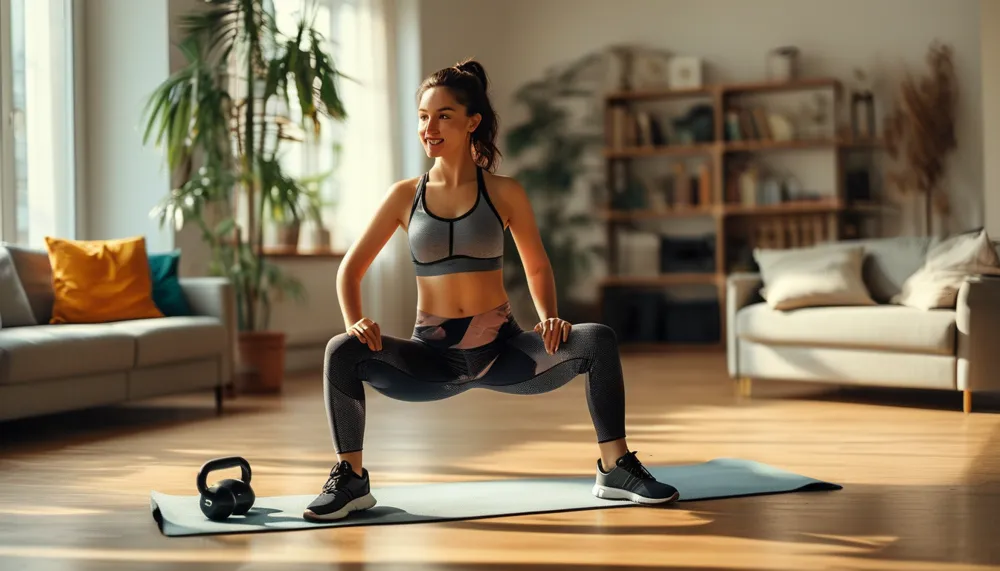
About 6×6 feet. That’s enough to lie flat, do a full lunge in any direction, and press a dumbbell overhead without repainting the ceiling.
Check the ceiling height too — an overhead press with a dumbbell needs roughly 7.5 feet for most people, and jumping rope needs a bit more.
The floor matters more than the area. Carpet is fine for bodyweight work but unstable for dumbbells; a firm mat over carpet solves both. On hard floors, a mat protects the surface and your knees.
Which Equipment Gives the Most Per Square Foot?
The golden rule: prioritize gear that does a lot in very little room.
1. Adjustable dumbbells. The single best small-space purchase. One pair replaces an entire rack, adjusting from about 5 to 50 lbs each in the footprint of a shoebox. Expensive relative to fixed dumbbells; worth it when space is the constraint.
2. Resistance bands. A light-medium-heavy loop set plus a long band with a door anchor. Nearly free, weigh nothing, hang on a hook, and cover an enormous range of exercises — especially upper body and glutes. See the resistance bands guide for what’s possible.
3. A quality mat. Comfort and grip for floor work, and it defines the space. Rolls up under a bed.
4. A doorway pull-up bar. If you have a suitable frame, this unlocks the entire vertical pulling category for around $30 and stores in a cupboard.
Optional extras that punch above their size: a jump rope (compact cardio), a single kettlebell (dynamic full-body work), and a suspension trainer that anchors over a door.
What to skip in a small space: a bench (a sturdy chair or the floor covers most of it), a squat rack, a treadmill, and fixed dumbbell sets.
How Do You Store It All?
Go vertical. Wall hooks for bands, jump ropes, and a suspension trainer. A single slim shelf holds a kettlebell and a foam roller. Vertical storage is the entire trick — floor space is precious, wall space usually isn’t.
Go under. Mats, bands and a folded jump rope all live under a bed or sofa. Adjustable dumbbells fit under most beds too.
Go foldable. Anything that folds into a cupboard is a small-space hero. If you’re considering a larger purchase, check whether it folds before checking anything else.
Go dual-purpose. A sturdy ottoman doubles as a step and a bench. A wide windowsill is a decline surface. Stairs are a plyo box and a calf-raise station.
What Nobody Tells You
Bodyweight training does more of the work than the equipment does. Squats, lunges, push-ups, planks and glute bridges build real strength on a patch of floor. Buy equipment to fill specific gaps — pulling movements and heavier leg loading — not to build a program from scratch.
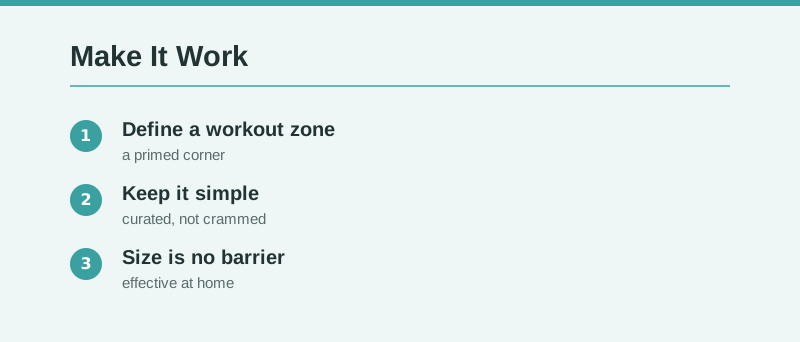
A defined zone matters more than better gear. A designated corner with the mat already down and the gear within reach removes the friction that kills home training. When setting up takes four minutes, you skip the workout. When it takes zero, you don’t.
Noise is the real constraint in apartments, not space. Dropping dumbbells and jumping are what generate complaints. A thick mat, controlled lowering, and swapping jump rope for mountain climbers solves nearly all of it.
Buy in stages. Mat and bands first. Live with them for a month. Then adjustable dumbbells. Then the pull-up bar. Buying everything at once is how corners fill with unused equipment.
What Does a Small-Space Setup Look Like in Practice?
The $100 version: mat, resistance band set, doorway pull-up bar. Fully capable full-body training. Footprint when stored: a shoebox and two hooks.
The $400 version: add adjustable dumbbells. This covers essentially everything a general fitness program needs — presses, rows, squats, lunges, carries, and progressive loading.
The $600 version: add a single kettlebell and a suspension trainer. Now you have swings, get-ups, and every angle of bodyweight rowing.
Beyond that, additional spending buys convenience rather than capability. In a small space, that’s usually the wrong trade.
FAQ
What’s the minimum space for a home gym?
Roughly 6×6 feet of clear floor with about 7.5 feet of ceiling height. That covers dumbbell work, all bodyweight exercises, and floor training. Less than that still works for band and mat-based routines.
Are adjustable dumbbells worth the money?
In a small space, yes — clearly. They cost several times what fixed dumbbells do per pound, but they replace an entire rack in a shoebox footprint. If space weren’t limited, fixed dumbbells would win on price and durability.
How do you work out at home without disturbing neighbours?
Use a thick mat, lower weights under control rather than dropping them, and swap jumping exercises for low-impact alternatives — mountain climbers instead of jumping jacks, step-ups instead of box jumps. Bands are almost completely silent.
Can you build muscle in a small home gym?
Yes. Muscle responds to progressive load and adequate volume, not to the square footage of the room. Adjustable dumbbells plus bodyweight progressions supply plenty of both for most people’s goals.
TL;DR:
- 6×6 feet of floor and 7.5 feet of ceiling is enough for a full setup.
- Four essentials: adjustable dumbbells, resistance bands, a quality mat, a doorway pull-up bar.
- Skip the bench, rack, treadmill and fixed dumbbell sets.
- Store vertically on wall hooks and under the bed; favor anything foldable.
- Bodyweight training covers most of the program — equipment fills specific gaps.
- Define one corner as the zone and leave the mat down; friction is what kills home training.
- Buy in stages: mat and bands first, dumbbells second, extras later.
See It in Motion
Seen here: UPF 50+ Short Sleeve Rashguard Swim Shirt — shop it on bubblelime.com
Keep Reading
This article is for general informational and styling purposes only. Fit, sizing, and product availability may vary.