The Complete Guide to What Actually Goes Wrong in Your First Six Months of Home Gym Ownership
Quick Answer: Home gym failure rarely comes from one bad decision — it’s usually a predictable sequence: overbuying early, under-planning space, neglecting flooring, then losing motivation once the initial setup excitement fades. Knowing the sequence in advance lets you skip most of it.
A home gym feels like a single purchase decision, but the real story unfolds over months, in a fairly predictable pattern that catches almost everyone who skips planning ahead.

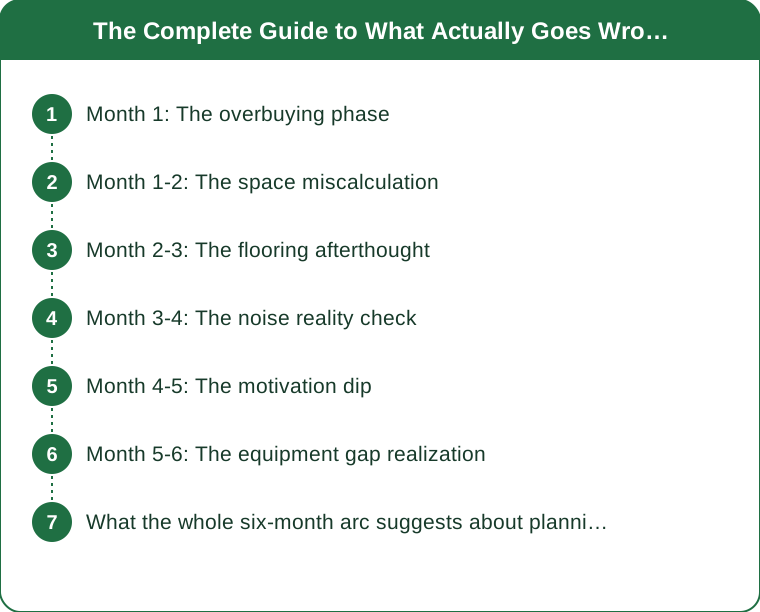
Month 1: The overbuying phase
Early enthusiasm often leads to buying equipment based on what looks impressive rather than what a realistic weekly routine actually needs — a rack, plates, a bench, and one or two cardio pieces cover most goals, but it’s tempting to add specialty equipment before establishing consistent use. The equipment that gets used consistently after six months is almost always simpler than the initial wish list. Start with a core setup and add specialty pieces only once a gap in your actual routine becomes clear through use, not anticipation.
Month 1-2: The space miscalculation
Most first-time home gym owners underestimate how much clearance certain movements need — a barbell overhead press needs more ceiling height than expected, and a squat rack needs walking space on all sides, not just in front. Measuring your actual movement patterns, not just where the equipment physically sits, prevents a setup that looks fine empty but feels cramped in use. This is also when garage or basement temperature extremes first become obvious, since a space that seemed fine during a quick walkthrough reveals its real character across a full range of weather.
Month 2-3: The flooring afterthought
Flooring often gets treated as a finishing touch rather than a functional requirement, and skipping proper rubber flooring leads to both equipment damage (dropped weights on unprotected concrete or wood) and increased noise that becomes a real issue in shared or upstairs-neighbor situations. Retrofitting flooring after equipment is already placed is more disruptive than installing it first, so this is one of the most common ‘wish I’d done this before’ regrets in early home gym feedback.

Month 3-4: The noise reality check
Dropped weights, especially on flooring that wasn’t planned for it, generate more noise and vibration than most people anticipate, and this is often when conflicts with housemates, downstairs neighbors, or family members schedules first surface. Addressing this reactively — after a complaint — is more stressful than planning noise reduction (thicker mats, controlled lowering habits, time-of-day awareness) from the start.
Month 4-5: The motivation dip
The novelty of a new space wears off around this point for many people, and without the external structure of a gym membership or class schedule, home workouts can quietly become less frequent. This is less about the equipment and more about habit design — having a fixed, calendared time rather than a vague ‘whenever I feel like it’ approach is what separates home gyms that stay in consistent use from ones that become storage.
Month 5-6: The equipment gap realization
By this point, a real routine has usually emerged, and it often reveals a genuine gap the original setup didn’t anticipate — maybe more resistance band variety, a different bench angle, or additional cardio equipment based on what workouts actually stuck. This is the appropriate time to expand, since the purchase is now based on demonstrated need rather than initial guesswork, which tends to produce far less regretted spending than the month-1 overbuying phase.
What the whole six-month arc suggests about planning ahead
Every mistake in this timeline stems from the same root cause: planning based on imagined future use rather than observed actual use. A smaller, simpler initial setup that gets used consistently, paired with a willingness to invest properly in flooring and space planning from day one, avoids nearly every regret in this list. The equipment additions that happen after month five, based on real routine data, are consistently reported as the most satisfying and least regretted purchases in the entire process.
TL;DR:
- Early months tend toward overbuying and underestimating real space needs
- Flooring and noise planning save far more regret when done upfront, not retrofitted
- Motivation naturally dips without external structure — build a fixed schedule
- The most satisfying equipment additions come after month five, based on real use
A home gym succeeds less on the initial purchase and more on avoiding this predictable six-month mistake arc.
See It in Motion
Seen here: UPF 50+ Short Sleeve Rashguard Swim Shirt — shop it on bubblelime.com
Keep Reading
This article is for general informational and styling purposes only. Fit, sizing, and product availability may vary.