The Home Gym Mirror Guide: Placement, Size, and Whether You Need One at All
Quick Answer: A home gym mirror earns its wall space for form checking in strength work - side-angle views of squats, hinges, and rows catch errors your body cannot feel. Placement rules: long wall, centered on where you actually lift, bottom edge no higher than knee height, viewing distance of at least four feet, and never directly behind a barbell path. Skip glass in favor of glassless acrylic or PET panels where kids, balls, or barbells share the room. And know the honest caveat - for skill work and mind-muscle connection, training without the mirror is sometimes the better teacher.
Every commercial gym wraps you in mirrors, so every garage gym owner assumes walls of glass are step one. Then the plywood-and-dumbbells crowd posts their best lifting year ever with nothing on the wall but a flag - and the question gets interesting: what is the mirror actually for?

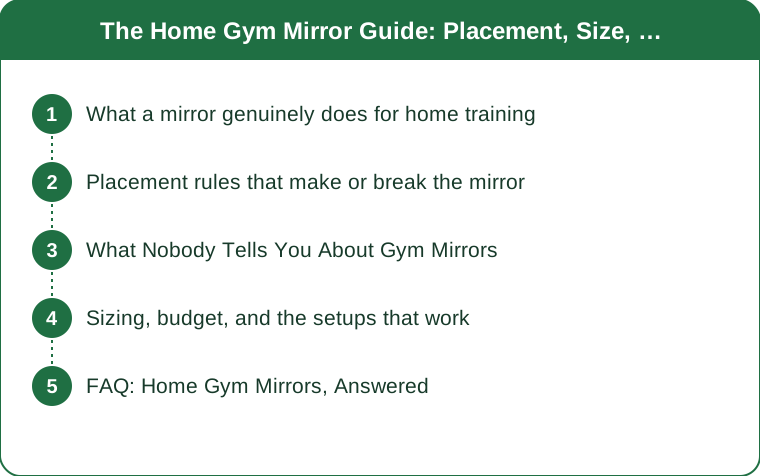
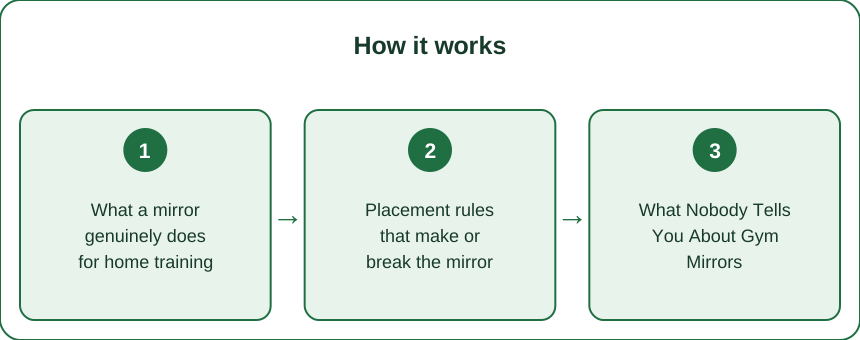
What a mirror genuinely does for home training
The case for the mirror is specific, not decorative.
It shows you the plane you cannot feel. The most expensive form errors - knees caving in a squat, a lower back rounding into a deadlift, one hip hiking in a lunge - happen in planes your proprioception reports poorly, especially under load and fatigue. A mirror set for a side or three-quarter view supplies the missing camera angle in real time, which is faster feedback than filming and reviewing between sets.
It is a rep-quality auditor late in sets. Fatigue degrades form silently; the mirror makes the degradation visible while there is still time to end the set. Home lifters without training partners get no spotter and no coach - the mirror is the only second opinion in the room.
It teaches positions faster during the learning phase. New movements wire in quicker when visual feedback confirms what a cue feels like - what neutral spine actually looks like versus what it feels like is a famously humbling gap. For self-taught home lifters this shortcut matters more than it does for anyone with a coach on the floor.
It multiplies light and space. The unglamorous win: a mirror on the long wall visually doubles a cramped garage bay or basement corner and bounces whatever daylight exists. Small windowless home gyms feel dramatically less like bunkers with one large reflective panel - and rooms that feel good get used.
What it does not do: improve balance-dependent skill work (it can hinder it - more below), replace filming for barbell path analysis, or make anyone train harder. The mirror is an instrument, and instruments need aiming.
Placement rules that make or break the mirror
Where it hangs matters more than what it cost.
Put it on the long wall, perpendicular to your lifting direction. The default error is hanging the mirror where a mirror looks nice - facing the door, above a console height. The correct spot faces your training station so that standing at your squat or dumbbell area you get a natural side or front view without rotating your neck mid-rep. Neck rotation under load is itself a form fault; the mirror must come to your eyes, not the reverse.
Bottom edge at knee height or lower. Form checking lives below the waist - foot stance, knee tracking, hip depth. A mirror mounted at bathroom height shows you a torso doing mysterious things atop invisible legs. For most setups the bottom edge lands 12 to 18 inches off the floor; full-length leaners hit this automatically.
Four feet of viewing distance minimum, six is better. Closer than that and your visual field cannot hold the whole body at once, so you fixate on parts - the exact opposite of position awareness. In tight rooms, placing the mirror diagonal-across from the station buys distance a parallel wall cannot.
Angle it a few degrees down if wall-leaning. A leaned mirror naturally tilts back; a slight forward shim at the base keeps the reflection honest. A backward-tilted mirror subtly lengthens legs and flattens depth - flattering, and lying to you about your squat.
Never behind a barbell path or a rebounding ball. The wall behind a bench press, overhead press, or wall-ball station is a strike zone. Mirror glass and strike zones end one way. Which leads directly to materials.

What Nobody Tells You About Gym Mirrors
Commercial gyms use mirrors partly as retail psychology. Walls of glass make small floors read huge, keep members engaged with their own progress, and brighten cheap lighting. Useful to know, because it means the commercial look is not a training prescription - it is a real-estate trick you are free to ignore at home.
Glassless beats glass in most home rooms. Acrylic and PET film mirror panels weigh a fraction of glass, install with adhesive or screws, and do not produce a floor of blades when a clamp, a kettlebell, or a kid’s scooter finds them. The reflection is a touch less perfect - a wavy panel is usually an installation-flatness problem, solved by mounting on a flat backer board. In garages with balls, bikes, and barbells, this is not a style choice; it is risk management.
Sweat plus dust is the actual maintenance enemy. Garage mirrors haze fast. A microfiber cloth and diluted vinegar weekly keeps the feedback crisp - a hazed mirror gets ignored, and ignored mirrors stop auditing form.
The mirror can sabotage skill work. Balance drills, olympic lift variations, and anything where you should feel position rather than watch it can wire a visual dependency - athletes who learn balance staring at a mirror wobble when it is gone. The fix is a training split: mirror-on for strength form checks, mirror-off (train facing away) for balance, flow, and mind-muscle days. People who do yoga at home often find the mirror actively worsens practice for exactly this reason.
Check the view in your actual training clothes. A mirror check in a baggy tee hides the hip and knee lines the mirror exists to show; the days you train in fitted leggings are the days knee-cave and hip-shift are actually visible. Dress for the instrument to work.
And the psychology cuts both ways. For some, the mirror is motivating; for others it converts every session into an appearance audit. If you catch yourself critiquing instead of coaching, face away for a month - strength does not care.
Sizing, budget, and the setups that work
Match the mirror to the room and the training, not to the gym you left.
The workhorse: one 4-foot-wide, 5-to-6-foot-tall panel centered on the main lifting station, bottom edge low. This covers squat, hinge, press, and accessory checking for one person and costs a fraction of a mirror wall. Most home gyms genuinely need nothing more.
The step up: two panels in an L. One facing the station (front view), one on the adjacent wall (side view) - the side view being the one that catches back rounding and depth honestly. An L of two modest panels out-teaches one giant front-only wall, because the side angle is where the information lives.
The budget path: glassless panel kits and even large framed leaners from home stores work if mounted flat and low. Prioritize size and placement over optical perfection - a huge slightly-imperfect reflection you can see your feet in beats a jewel-perfect vanity mirror at chest height.
The no-mirror alternative is legitimate. A phone on a cheap tripod with a 10-second timer delivers better analysis than any mirror - real angles, slow motion, replay - just not in real time. Plenty of strong lifters run phone-only. The honest hybrid: mirror for live auditing, phone for weekly deep review, and the two together cost less than one wall of commercial glass.
Installation notes that save regret: mount into studs or use a French cleat for heavy panels; keep panels off walls that flex when garage doors slam; in humid climates leave a small air gap behind the panel to prevent backing corrosion; and put a strip of daylight-temperature LED above the mirror - form checking in a dim orange garage is squinting, not coaching.
Whatever the configuration, apply the one-month test: if a panel has not changed a single set’s execution in a month, it is decor - and decor is fine, as long as the budget knew that.
FAQ: Home Gym Mirrors, Answered
Do I actually need a mirror in a home gym?
Need, no - a phone on a tripod covers form analysis. But for real-time form auditing during strength work, especially training alone without a coach, one well-placed panel earns its cost. For balance and skill work, training without it is often better. Most complete setups use both modes deliberately.
How high should a gym mirror be mounted?
Low - bottom edge at knee height or below, roughly 12 to 18 inches off the floor, so feet, knees, and hips are in frame. Height of the top edge matters far less than the bottom; the information in lifting lives in the lower half of the body.
Are glassless gym mirrors worth it?
In garages and shared family spaces, emphatically yes - acrylic or PET panels shrug off impacts that turn glass into an emergency. Reflection quality is slightly below glass and depends on mounting flatness, so fix them to a flat backer. Reserve real glass for rooms where nothing flies.
Where should the mirror go in a small home gym?
On the long wall or diagonal from your main station to maximize viewing distance, never behind a barbell or ball path. In a one-corner setup, a single panel angled to give a three-quarter view from your lifting spot beats a straight-on panel you stand too close to.
Is training in front of a mirror bad for form?
For strength movements, live visual feedback mostly helps - it catches faults proprioception misses. For balance and skill work, chronic mirror use can build visual dependency, so practice those facing away. The failure mode to watch is psychological: if the mirror turns sessions into appearance audits, turn your setup around for a while.
TL;DR:
- The mirror’s real job is live form auditing in strength work - the side-angle views that catch knee cave, back rounding, and depth.
- Placement rules: long wall facing the station, bottom edge at knee height or lower, four-plus feet of viewing distance, never in a strike zone.
- Glassless acrylic or PET panels are the sane choice wherever barbells, balls, or kids exist; mount flat and keep it clean.
- One 4x6 panel covers most needs; an L of two panels adds the honest side view; a phone on a tripod is the legitimate zero-mirror alternative.
- Use mirror-on for strength checks and mirror-off for balance and skill days - and if it audits appearance instead of form, face away.
The commercial gym’s wall of glass was selling square footage. Your one panel, hung low on the right wall, is selling you something better: a second opinion on every rep, in a room where you train alone.
See It in Motion
Seen here: High Waist Jogger Sweatpants with Pockets — shop it on bubblelime.com
Keep Reading
This article is for general informational and styling purposes only. Fit, sizing, and product availability may vary.