The Complete Guide to Getting a Garage Gym Ready for Cold Months
Quick Answer: Cold garages create four distinct problems: equipment that’s genuinely unsafe or unpleasant to touch, rubber and foam that stiffens and cracks, condensation that rusts bars and plates, and a warm-up requirement most people ignore. The highest-value fixes are insulating the garage door, adding a targeted heat source, moving metal contact points off the concrete, and controlling humidity. Doing this in September costs a fraction of what abandoning the gym in January does.
The first genuinely cold morning, you walk out, touch the barbell, and immediately understand why garage gyms have a winter attrition problem.
Almost all of it is solvable, and almost none of it gets solved in the season when it matters — because by then it’s cold and you don’t want to be out there working on it.

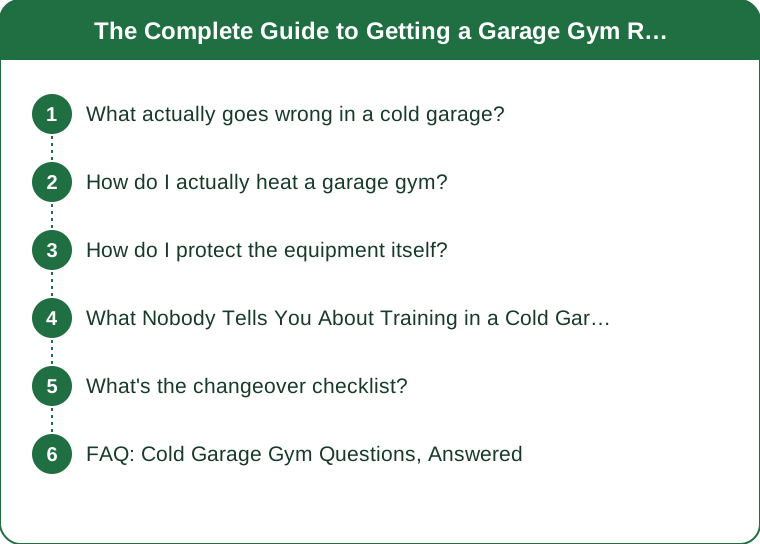
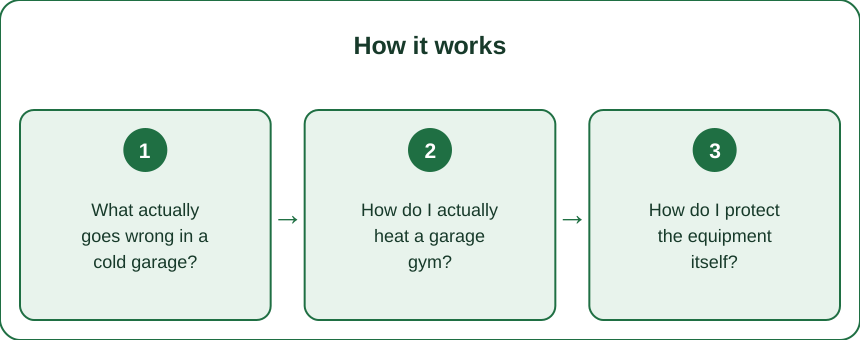
What actually goes wrong in a cold garage?
Four separate problems that get lumped together as ‘it’s cold’, and they need different solutions.
Metal contact is the first and most immediate. A steel barbell at 40°F pulls heat from your hands fast enough to make a working set genuinely unpleasant, and below freezing it becomes a skin-contact risk. The knurling makes it worse by increasing contact area. This is the single most common reason garage gym training stops in winter, and it’s the easiest to fix.
Rubber and foam stiffen and become brittle. Rubber flooring, bumper plates, resistance bands, and foam rollers all harden considerably in cold. Bands are the safety issue — a cold band has substantially reduced elasticity and elevated snap risk, and a band failing under tension is a real injury. Bumper plates dropped in genuine cold can crack, particularly cheaper ones.
Condensation is the slow, expensive one. Cold metal in a garage that warms during the day collects moisture from the air, and that cycle rusts barbells, plates, and rack uprights. Rust on a barbell’s knurling is functionally permanent damage. This is the problem people notice in March, caused by decisions made in October.
And your body needs far more preparation. Muscle and connective tissue are less compliant in cold, and the warm-up that was adequate in July is inadequate at 45°F. Cold-weather training injuries in home gyms cluster heavily in the first working set, which is exactly where a short warm-up shows up.
The compounding factor is motivation. Every one of these adds friction, and a garage gym only works if the friction stays low. A cold gym doesn’t get you injured as often as it gets you to stop going, which is the more expensive outcome.
How do I actually heat a garage gym?
Target the space you use, not the volume of the building — and insulate before you heat, or you’re paying to warm the street.
Insulate the garage door first. It’s typically the single largest uninsulated surface and it faces outward. A garage door insulation kit costs relatively little, installs in an afternoon, and can raise ambient temperature by 8 to 12°F on its own in an otherwise-attached garage. This is the highest return-per-dollar change available.
Then seal the gaps. Weather stripping along the door bottom and sides, and foam sealant around any penetrations. Air infiltration undermines heating more than poor insulation does in most garages.
For heat, radiant beats convective in a space this leaky. An infrared or radiant heater warms objects and people directly rather than trying to warm a large volume of air that’s constantly being exchanged. Point it at your training area and it works within minutes. A convection heater in a leaky garage runs constantly and never gets there.
Sizing: roughly 10 watts per square foot for a moderately insulated space, more for poorly insulated. A 1500W unit handles a 150 square foot training area adequately if the space is sealed reasonably.
Run it 20 to 30 minutes before you train, on a smart plug or timer. Heating on arrival means training in a cold room for the first half of the session — the pre-heat is what makes the difference.
Propane and kerosene heaters produce combustion byproducts and moisture. They heat effectively and they add water vapor to a space where condensation is already your enemy, plus carbon monoxide risk in an enclosed space. If you use one, ventilation is mandatory and a CO detector is not optional. Electric is the safer default for an attached garage.
Insulating the ceiling matters if there’s living space above — you’ll be heating their floor otherwise, which is at least not entirely wasted.
How do I protect the equipment itself?
Humidity control and contact management, in that order.
Rust comes from condensation cycling, not from cold. When warm humid air meets cold steel, water condenses on the metal. In a garage that swings 25°F between day and night, this happens most nights.
A dehumidifier is the direct fix and is more valuable than heating for equipment preservation specifically. Target 45 to 55% relative humidity. A small unit running on a humidistat costs little to operate and prevents damage that’s expensive to reverse.
Oil the barbell before winter, not after. A light coat of 3-in-1 oil or a dedicated barbell oil, wiped on and off with a rag, displaces moisture from the knurling where rust starts. Repeat monthly through winter. Ten minutes, and it’s the difference between a barbell lasting decades and a barbell needing replacement.
Store bars horizontally on a rack, off concrete. Concrete wicks moisture continuously, and anything metal resting on a garage floor is sitting in a humid microclimate. Vertical bar storage is fine; floor contact is not.
Get plates off the floor too. Iron plates rust from the bottom up when stored on concrete. A plate tree or even a wooden pallet solves it.
Bring bands and small rubber items indoors. They’re light, they’re the most cold-sensitive things you own, and a bin that lives inside and comes out for sessions removes the problem entirely.
Cover the rack and bar with a moving blanket overnight if you can’t dehumidify. It’s crude and it meaningfully reduces condensation on the metal by slowing the temperature swing.
Check the flooring for gaps. Rubber mats contract in cold and gaps open at the seams. A gap under a rack foot or in a lifting area is a rolled ankle waiting to happen.

What Nobody Tells You About Training in a Cold Garage
Your numbers will drop and it isn’t detraining.
Strength output is genuinely lower in cold muscle. Force production, rate of force development, and power all decline measurably below optimal muscle temperature. A 5 to 10% drop in a cold garage is normal, and lifters who don’t know this interpret it as lost progress and either overreach chasing it or get demoralized.
The fix is a longer, more graded warm-up — not more caffeine. Ten to fifteen minutes before the first working set: general movement to raise core temperature, then progressively loaded warm-up sets. The warm-up sets are the part people cut, and they’re the part that matters most in cold.
Warm-up sets should be more numerous, not heavier. Where summer might be bar, 50%, 70%, 85%, winter benefits from bar, 40%, 55%, 70%, 80%, 90%. More steps, smaller jumps.
Rest periods become a problem. You cool down measurably during a three-minute rest in a 45°F garage, so the second set starts colder than the first. Wear layers you keep on between sets and remove only for working sets, or shorten rest slightly and accept a small load reduction.
Grip fails first and it’s not your grip. Cold hands lose fine motor control and force production quickly. Thin gloves between sets — removed for the set itself if you prefer bare hands — solve more than they seem like they should.
The surprising one: cold garages are excellent for conditioning work. Heat is the limiter in most conditioning, and a 45°F garage lets you push intervals harder than a warm indoor space would. Some people restructure their winter training toward conditioning for exactly this reason, and it works.
And the thing almost nobody accounts for: the psychological cost of a cold gym is front-loaded. The hard part is the first three minutes, before the heater has worked and before you’ve warmed up. Everything you can do to shrink those three minutes — pre-heating on a timer, layers by the door, a plan already written — pays back more than any equipment change.
What’s the changeover checklist?
One afternoon in early autumn covers nearly all of it.
Insulation and sealing: garage door kit, weather stripping on the bottom seal and sides, foam around any gaps. This is the bulk of the afternoon and the bulk of the benefit.
Heat: mount or position a radiant heater aimed at the training area, put it on a smart plug or mechanical timer set for 25 minutes before your usual session.
Humidity: place a dehumidifier, set to 50%, and check that it drains somewhere it won’t freeze. A hygrometer on the wall tells you whether it’s working.
Equipment protection: oil the barbell, get everything metal off the concrete, move bands and foam indoors, cover the rack overnight if not dehumidifying.
Flooring: check seams and gaps, re-seat any mats that have shifted, and add a mat under the rack if it’s on bare concrete.
Lighting: this gets forgotten and matters more in winter. Dark garage plus early sunset plus poor lighting is a real training deterrent, and LED shop lights are inexpensive and transformative.
Set up a layers station by the door. A hoodie, thin gloves, and warm socks that live in the garage. Removing the ‘I need to go find warm clothes’ step removes a decision, and decisions are where garage gym habits die.
Finally, write your winter program before winter. Sessions with clear structure survive cold mornings; sessions you’re going to figure out when you get there do not.
FAQ: Cold Garage Gym Questions, Answered
What temperature is too cold to train in?
Below about 45°F, expect meaningful strength reduction and a real need for extended warm-ups. Below freezing, bumper plates and bands become genuinely risky and bare metal contact becomes a skin hazard. Most people find 55 to 60°F is the point where training feels normal again.
Will cold damage my barbell?
Cold itself won’t. Condensation will — and cold garages produce condensation nightly through temperature cycling. Oil the knurling monthly, keep humidity around 50%, and store the bar off the floor.
Can I use a propane heater in an attached garage?
It’s not recommended without dedicated ventilation. Propane and kerosene produce carbon monoxide and add substantial moisture to the air, which works directly against your rust prevention. Electric radiant is the safer choice for enclosed spaces, and a CO detector belongs in any garage where combustion heating is used.
Do bumper plates really crack in the cold?
Cheaper bumpers can, particularly when dropped repeatedly below freezing. Higher-quality plates are more tolerant. If your garage genuinely drops below freezing, either heat before training or avoid dropping loaded bars from height.
Is it worth insulating if I only train three times a week?
The door kit, yes — it’s a one-time cost and it improves every session plus protects equipment continuously. Full wall insulation is harder to justify for light use unless you’re already finishing the space for other reasons.
How do I stop condensation on the walls and ceiling?
That’s a ventilation and humidity issue rather than a heating one. A dehumidifier is the main tool; if condensation is heavy and persistent, the garage may need better ventilation, which is worth a conversation with someone who can look at the specific building.
Should I just train indoors in winter instead?
If you have the space, a winter indoor option removes the problem entirely and there’s nothing wrong with a seasonal split. Most people don’t have room for a rack indoors, which is why the garage setup is worth making work.
TL;DR: Fix the garage in September, or lose the gym in January.
- Insulate the garage door first. Highest return per dollar, and it can add 8 to 12°F on its own.
- Radiant heat beats convection in a leaky space, and it must run 20 to 30 minutes before you arrive — put it on a timer.
- Condensation, not cold, is what destroys equipment. Target 45 to 55% humidity and oil the barbell monthly.
- Get everything metal off the concrete, and bring bands and foam indoors — cold bands snap.
- Expect a 5 to 10% strength drop and add more warm-up sets with smaller jumps, not heavier ones.
- Keep layers on between sets, and stage a hoodie and gloves by the door to remove decisions.
- Fix the lighting. Dark plus early sunset kills more winter sessions than cold does.
Start with the garage door kit this weekend. It’s the one change that improves every other problem on this list at the same time.
See It in Motion
Seen here: High Waist Embossed Yoga Leggings with Side Pockets — shop it on bubblelime.com
Keep Reading
This article is for general informational and styling purposes only. Fit, sizing, and product availability may vary.