The Complete Guide to Making a Garage Gym Actually Usable Year-Round
Quick Answer: A usable year-round garage gym typically needs a combination of insulation, a portable heater or window AC unit sized to the space, and airflow management — attempting to condition an uninsulated garage is expensive and largely ineffective, so insulation should come before any heating or cooling equipment purchase.
Most garage gym setups fail not because of equipment choices, but because climate control gets treated as an afterthought rather than the foundation of the plan.

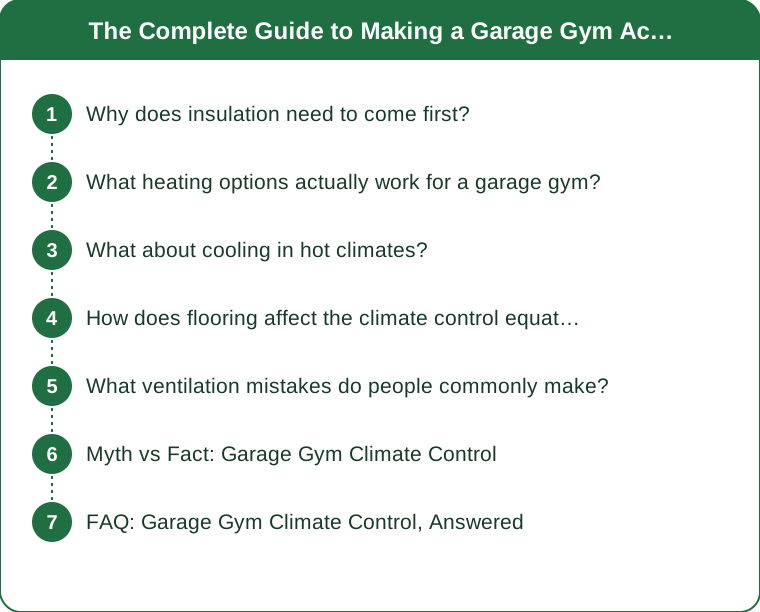
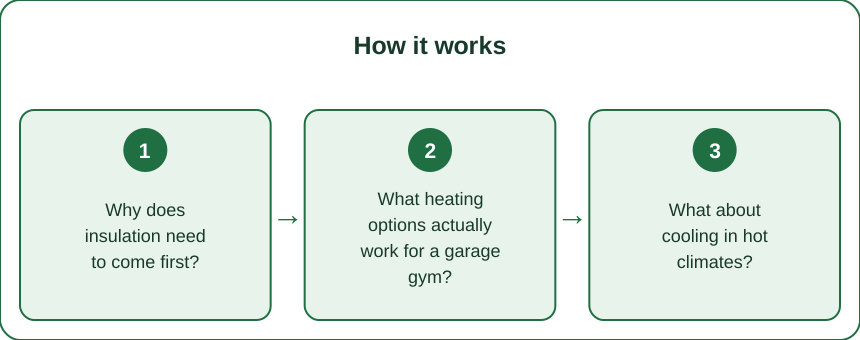
Why does insulation need to come first?
Running a heater or AC unit in an uninsulated garage is fighting a losing battle against outside temperature, since heat or cool air escapes almost as fast as it’s generated. Basic insulation — even simple foam board on garage door panels — dramatically improves the effectiveness of whatever climate control comes next.
Garage doors are usually the single biggest source of temperature loss in the space, more than walls or the garage’s exterior door, since standard garage doors have minimal built-in insulation.
What heating options actually work for a garage gym?
Portable electric space heaters work fine for garages under roughly 400 square feet with reasonable insulation, while larger spaces or colder climates often need a dedicated mini-split or a garage-rated propane heater for adequate warmth. Oversized rooms with undersized heaters are a common, frustrating mismatch.
Safety matters here — space heaters should always have automatic shutoff and never run unattended, especially in a space with workout equipment and potential clutter.
What about cooling in hot climates?
A window or portable AC unit sized to the garage’s square footage is the most common cooling solution, though a mini-split system, while more expensive upfront, is significantly more energy-efficient for regular year-round use than portable units.
For moderate climates, a combination of a strong fan and a dehumidifier can make a real difference without the cost of full air conditioning, especially if workouts happen during cooler parts of the day.

How does flooring affect the climate control equation?
Concrete floors retain cold in winter and can radiate heat in summer, making rubber gym flooring or interlocking foam tiles a meaningful upgrade beyond just injury protection — they add a thermal buffer between your body and the concrete slab.
What ventilation mistakes do people commonly make?
Sealing a garage too tightly without any air exchange creates humidity and air quality problems, especially during intense workouts. A simple vent fan or cracked window during use, even in a heated or cooled space, prevents the stale, humid air buildup that otherwise accumulates.
Myth vs Fact: Garage Gym Climate Control
Myth: A space heater alone can make any garage comfortable in winter. Fact: without insulation, most of that heat escapes faster than it accumulates, making the heater far less effective and more costly to run than expected.
Myth: Mini-splits are only worth it for whole-house use. Fact: for a garage gym used regularly year-round, a mini-split often pays for itself in energy savings compared to running portable heaters and AC units repeatedly over several years.
Myth: Garage gym equipment doesn’t care about temperature extremes. Fact: extreme heat and cold both degrade rubber flooring, plastic components, and even some metal equipment finishes faster than a climate-controlled space would.
FAQ: Garage Gym Climate Control, Answered
How much does basic garage insulation typically cost?
Foam board insulation for garage door panels and simple wall insulation kits can often be done for a few hundred dollars in materials for an average two-car garage space, making it one of the more affordable upgrades relative to its impact.
Is a portable AC unit enough for a hot climate garage gym?
For moderate heat, yes, but in consistently extreme summer climates, a portable unit often struggles to keep pace, making a mini-split a better long-term investment despite the higher upfront cost.
Does climate control affect equipment lifespan?
Yes — consistent extreme temperature and humidity swings accelerate wear on rubber flooring, vinyl-coated weights, and any equipment with plastic or foam components.
TL;DR:
- Insulate the space, especially the garage door, before investing in heating or cooling equipment
- Size your heater or AC unit to the actual square footage, not a guess
- Rubber or foam flooring adds a meaningful thermal buffer over bare concrete
- Include some ventilation even in a climate-controlled space to manage humidity
If your garage gym already exists and feels unusable in extreme weather, insulation is the upgrade to tackle first — before buying a bigger heater or AC unit.
See It in Motion
Seen here: High Waist Yoga Leggings with Side Pockets — shop it on bubblelime.com
Keep Reading
This article is for general informational and styling purposes only. Fit, sizing, and product availability may vary.