The Essential Home Gym Equipment on a Budget
Quick Answer: The essential home gym equipment on a budget is four items: a resistance band set (~$20), one adjustable dumbbell pair or a single kettlebell ($60–150), a quality exercise mat ($25–40), and a jump rope ($10). That covers full-body strength and cardio for under $200 — often under $120 if you buy one piece at a time.
You genuinely don’t need to spend a fortune or fill a room to train properly at home.
Four pieces of equipment cover the overwhelming majority of what a general fitness program needs. Everything beyond that is convenience, not capability — which is a distinction the fitness industry works hard to blur.
What Should You Buy First?
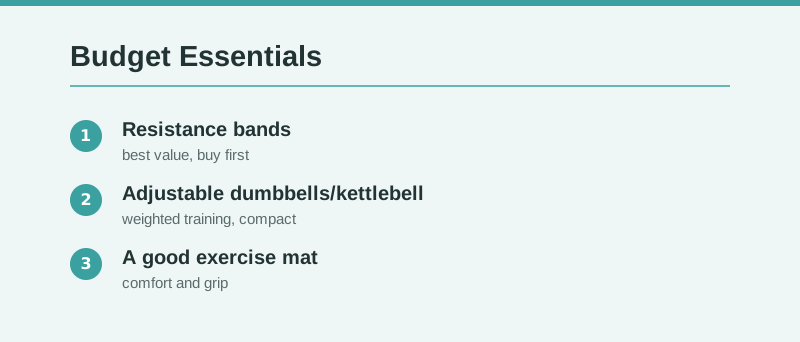
Resistance bands. ~$20. If you buy exactly one thing, make it these.
A light-medium-heavy loop set plus a long band with a door anchor covers glute work, rows, presses, pull-aparts, lateral walks, assisted pull-ups, and core work. They’re affordable, take up no space, weigh nothing, and travel.
Bands also have a genuine technical advantage: resistance rises through the range of motion, so they’re lightest where a joint is weakest and heaviest where it’s strongest. That’s a favorable loading curve you don’t get from a dumbbell.
What to look for: fabric loop bands (they don’t roll up like latex ones), and a long band with padded handles plus a door anchor. See the resistance bands guide for the exercise library.
What’s the Best Second Purchase?
Adjustable dumbbells or a single kettlebell. This is where real progressive loading enters the picture.
Adjustable dumbbells ($100–300) replace an entire rack — typically 5 to 50 lbs each, in the footprint of a shoebox. The most versatile single purchase in home fitness, and the right choice if budget allows.
A single kettlebell ($40–70) is the budget answer and covers an enormous range on its own: swings, goblet squats, presses, rows, carries, get-ups. Sizing: 8–12 kg for most women, 16–20 kg for most men as a first bell.
Which to pick? If you want to build strength progressively across many exercises, adjustable dumbbells. If you want maximum capability per dollar and enjoy dynamic full-body work, the kettlebell. Both are legitimate; neither is a mistake.
What Else Genuinely Earns Its Place?
A quality exercise mat. $25–40. Small purchase, disproportionate impact. Comfort and grip for core work, stretching, yoga and bodyweight moves; protection for both you and your floor. A mat makes floor training comfortable enough that you’ll actually do it — and look for at least 6mm thickness, since the thin travel mats are miserable on knees and spine.
A jump rope. $10. The cheapest cardio equipment that exists and among the most effective. Compact, brutal in the good way, and it stores on a hook. Sizing: stand on the middle, handles should reach your armpits.
Worth adding as budget allows:
- A doorway pull-up bar ($30) — unlocks the entire vertical pulling category, if you have a suitable door frame.
- A stability ball ($20) — core and balance work, and it doubles as a bench substitute for presses.
- A suspension trainer ($40–150) — anchors over a door, covers rows and every angle of bodyweight training.
What Nobody Tells You
Buy in stages, not all at once. Mat and bands first. Use them for a month. Then the dumbbells or kettlebell. Buying everything on day one is the reliable path to a corner full of untouched equipment and a story about how home workouts don’t work for you.
The expensive stuff is mostly convenience. A $2,000 rack lets you load heavier and change exercises faster. It does not build a capability that adjustable dumbbells plus bodyweight can’t reach for general fitness goals.
Used is fine for most of this. Kettlebells and dumbbells are essentially indestructible. Check local listings before buying new — iron doesn’t wear out. Buy bands new, though; latex degrades.
What to skip on a budget: ab machines, vibrating plates, anything advertised during a late-night infomercial, weighted hula hoops sold as fat burners, and treadmills (the most commonly abandoned purchase in home fitness).
What Can You Actually Train With This?
A complete program, honestly:
- Legs and glutes: goblet squats, lunges, Romanian deadlifts, banded lateral walks, single-leg glute bridges.
- Push: dumbbell or kettlebell presses, floor presses, band pressing, push-up variations.
- Pull: band rows, single-arm dumbbell rows, band pull-aparts, pull-ups if you added the bar.
- Core: planks, dead bugs, Pallof presses with a band, farmer’s carries.
- Cardio: jump rope intervals, kettlebell swings, bodyweight circuits.
That’s every movement pattern a general strength program requires, for well under $200 total. The gap versus a commercial gym shows up at heavy loads — not at the level most people are training.
FAQ
What’s the cheapest way to start a home gym?
Resistance bands and a mat, for about $50–60. That combination supports genuine full-body strength training, and you can add loaded work later as budget allows.
Are adjustable dumbbells or a kettlebell better for a beginner?
A kettlebell is cheaper and covers a lot of ground quickly. Adjustable dumbbells are more versatile and easier to progress with over time. If money is tight, start with the kettlebell — you’ll never regret owning one.
Do you need a bench?
Not really. The floor covers floor presses, a stability ball substitutes for incline work, and a sturdy chair or ottoman handles step-ups and split squats. A bench is a nice-to-have well after the four essentials.
How much should a beginner home gym cost?
Between $100 and $200 buys everything genuinely necessary. Spending more is fine but buys convenience and heavier loading rather than a fundamentally different training outcome.
TL;DR:
- Four essentials: resistance bands (~$20), adjustable dumbbells or a kettlebell ($40–300), a 6mm+ mat ($25–40), a jump rope ($10).
- Bands first — best value in home fitness, and the resistance curve suits joints well.
- Kettlebell sizing: 8–12 kg for most women, 16–20 kg for most men.
- Add a doorway pull-up bar, stability ball, or suspension trainer as budget allows.
- Buy in stages; buying everything at once is how equipment goes unused.
- Buy dumbbells and kettlebells used — iron doesn’t wear out. Buy bands new.
- Under $200 covers every movement pattern a general strength program needs.
See It in Motion
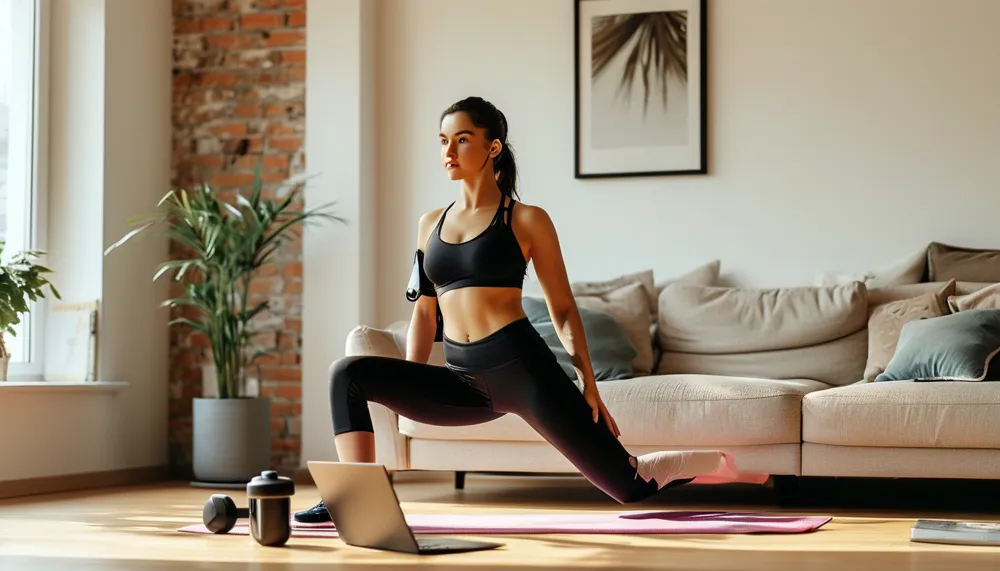
Seen here: Yoga Jogger Sweatpants with Pockets — shop it on bubblelime.com
Keep Reading
This article is for general informational and styling purposes only. Fit, sizing, and product availability may vary.