Rack vs Machine vs Adjustable Dumbbells: The Complete Home Gym Decision
Quick Answer: Adjustable dumbbells ($300 to $900) win on space and convenience and cover most people’s needs for years, but they cap out for lower body strength. A power rack and barbell ($700 to $1,800 with plates) has the highest ceiling and the best cost-per-pound of resistance, but needs floor space, height, and safety planning. An all-in-one machine or functional trainer ($1,500 to $4,000) is the safest for training alone and the most space-efficient per exercise, but progression is limited by the stack. Most people should buy adjustable dumbbells first and add a rack later - in that order, not the reverse.
The wrong decision here is expensive, heavy, and difficult to undo, which is why it deserves an hour of thought before it deserves a credit card.

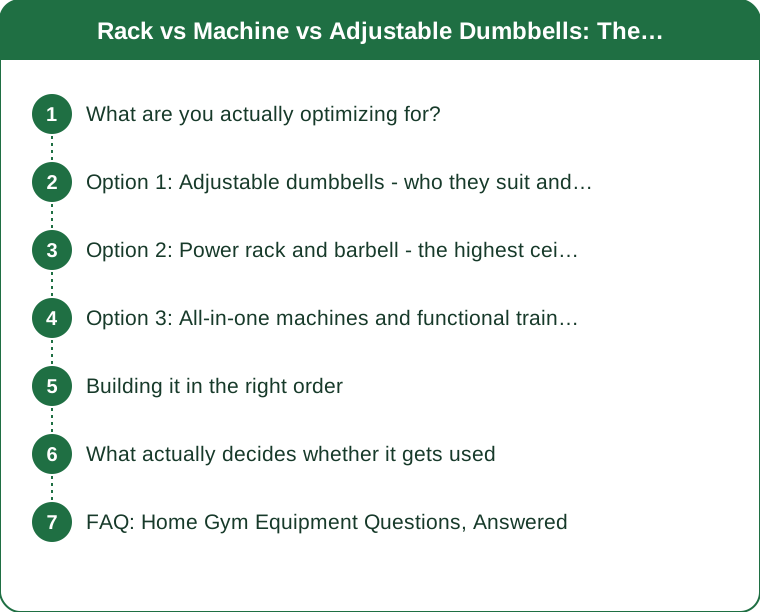
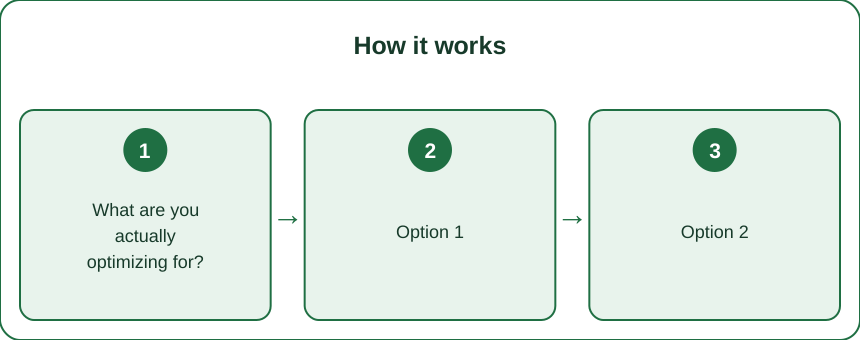
What are you actually optimizing for?
Five variables, and their weighting is personal rather than universal.
Space, honestly measured. Not the room’s dimensions - the usable training footprint with the equipment in place. A power rack needs roughly 8 x 6 feet of clear floor plus room to load plates and walk around, and a barbell is 7 feet wide regardless of how you store it. Adjustable dumbbells need about 4 x 6 feet of movement space and a corner to live in.
Ceiling height is the constraint people forget. Overhead pressing needs roughly your height plus 24 inches of clearance. A power rack in a 7-foot basement means no overhead barbell work at all, which removes a large chunk of the reason to own a rack. Measure before you shop, not after.
Training goals decide the ceiling that matters. If your priority is general strength and body composition, dumbbells cover it for years. If you specifically want to squat and deadlift heavy, nothing replaces a barbell. Be honest about which of those you are, not which you would like to be.
Training alone changes the safety math significantly. Heavy barbell work without a spotter requires proper safety pins or straps and disciplined use of them. A machine removes that concern almost entirely, and for some people that is worth the reduced ceiling on its own.
Friction determines whether you use it. The equipment that gets used is the equipment that takes ten seconds to start with. Adjustable dumbbells win this decisively - dial and go, versus loading plates - and consistency beats capability for almost everyone in year one.
Option 1: Adjustable dumbbells - who they suit and where they stop
The cost: $300 to $900 depending on mechanism and maximum weight. Common ranges go to 50, 70, or 90 pounds per hand.
What they cover well: all upper body pressing and pulling, unilateral lower body work (split squats, lunges, step-ups, Romanian deadlifts), core work, and any conditioning circuit. This is genuinely most of a well-rounded training program, and it covers it in a footprint the size of a laundry basket.
Where they stop: bilateral lower body strength. Once you can goblet squat 90 pounds for sets of ten, dumbbells stop being a meaningful squat stimulus, and there is nowhere to go. The same happens with deadlifts, usually sooner. For anyone whose goal includes heavy lower body work, this ceiling arrives in year one or two.
The unilateral workaround is real but partial. Bulgarian split squats and single-leg RDLs load one leg at a time and extend the useful range considerably - a 70-pound dumbbell in each hand on a split squat is a serious stimulus. This buys years, but it does not buy forever, and unilateral work has its own balance and setup demands.
Mechanism matters more than brand. Dial and selector systems are fast but have more failure points and generally should not be dropped. Plate-loaded adjustable dumbbells are slower to change but nearly indestructible. Whichever you buy, check the changeover speed - a system that takes 30 seconds per change is one you will resent during supersets.
Who should buy these first: almost everyone. They are the highest-utility purchase per dollar and per square foot for a beginner or intermediate lifter, they resell easily if your setup changes, and they remain useful accessories even after you add a rack later. The reverse order - rack first, dumbbells later - leaves a much bigger gap in the meantime.
Option 2: Power rack and barbell - the highest ceiling
The cost: $400 to $900 for a rack, $200 to $350 for a quality barbell, $300 to $600 for plates, plus a bench at $150 to $400. Realistically $1,000 to $1,800 for a setup that will not need replacing.
What it gives you: effectively unlimited progression. Squats, deadlifts, bench press, overhead press, rows, and every barbell variation, with load added in 5-pound increments indefinitely. Cost per pound of resistance is by far the lowest of the three options once you own plates.
The safety requirement is non-negotiable. Training alone with a barbell means using safety pins or straps set at the correct height on every set, every time. A rack without properly used safeties is genuinely more dangerous than any other option here. Set them so a failed rep can be dumped safely, and test that before you need it.
Space and structure reality: roughly 8 x 6 feet of floor, a ceiling of at least 8 feet for overhead work, and a floor that can take dropped weight. Upstairs rooms are usually a bad idea - the point loading is significant and the noise is worse than people expect. Garages and basements are the natural homes.
Flooring is not optional. Horse stall mats (3/4 inch rubber) at around $50 each are the standard answer and protect both the floor and the equipment. Budget $150 to $300 for enough coverage.
Who should buy this: people whose goals genuinely require heavy bilateral lifting, who have the space and ceiling, and who already train consistently. The mistake is buying a rack to create consistency - it does not work that way, and unused racks are the single most common item in home gym resale listings.
One good compromise: a half rack or a squat stand takes considerably less space and costs less, at the price of some safety margin and the ability to do pull-ups from the frame. For a garage with limited depth, it is often the sensible version.
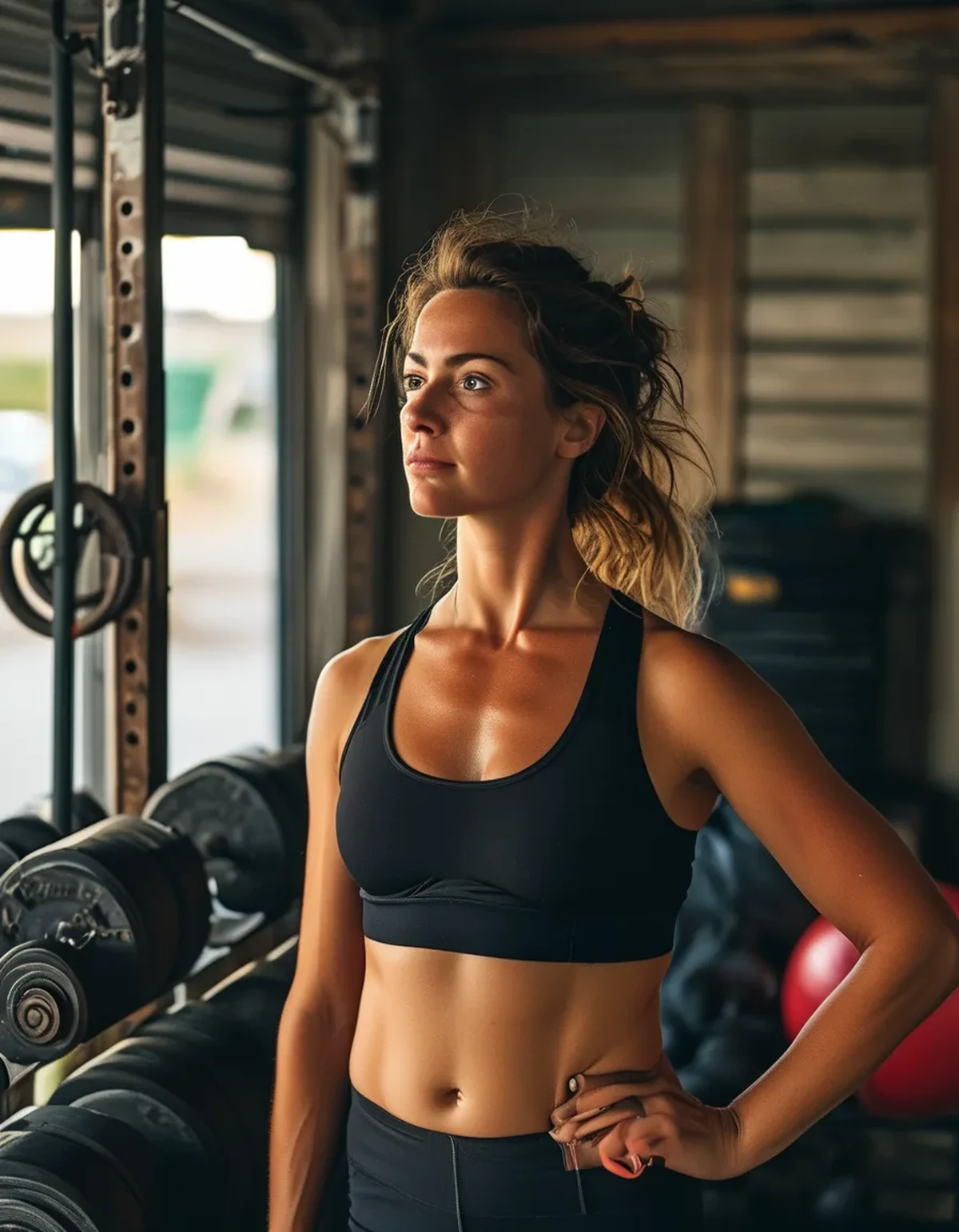
Option 3: All-in-one machines and functional trainers
The cost: $1,500 to $4,000 for a functional trainer with a decent stack; $2,000 to $5,000 for a comprehensive all-in-one.
What they do well: safety when training alone, since a cable stack cannot fall on you. Speed of exercise changes - a pin rather than a plate change. And exercise variety in a small footprint, since one machine covers pressing, pulling, and a large range of cable work.
Where they fall short: the weight stack is the ceiling, typically 150 to 200 pounds, and cable resistance does not translate one-to-one to free weight loads. Lower body work is the weak point on nearly all of them - cable squats are not a serious substitute for loaded squats.
Cable resistance changes through the range in ways free weights do not, which is neither good nor bad but does mean the numbers are not comparable and progression can feel less clear.
Footprint is smaller than it looks in photos for a functional trainer - typically 4 x 7 feet - but the required clearance in front for cable work adds significantly, and ceiling-mounted pulleys need real height.
Who should buy this: people who train alone and are genuinely concerned about safety, people who want variety and speed over maximum load, and anyone rehabbing or working around an injury where controlled resistance matters. It is also the best option for a shared household setup where multiple people of different sizes and abilities use the same equipment, because changing between them takes seconds.
The honest caveat: at $2,500, you could have a full rack setup plus adjustable dumbbells plus flooring. The machine buys safety and convenience, not capability - so it is worth being clear that convenience is what you are paying for.
Building it in the right order
Almost nobody should buy everything at once, and the sequence matters more than the total.
Phase 1 ($400 to $900): adjustable dumbbells, a bench, and a mat. This covers a complete program for most people for at least a year. An adjustable bench is the most underrated purchase here - it multiplies what a pair of dumbbells can do, and a flat-only bench is a false economy at a $100 difference.
Phase 2 ($100 to $250): resistance bands, a pull-up bar, and flooring. Bands cover the accessory and rehab work dumbbells do awkwardly. A doorway or wall-mounted pull-up bar adds the vertical pulling that dumbbells cannot. Flooring protects everything below it.
Phase 3 ($1,000 to $1,800): rack, barbell, and plates - if and only if you have hit the dumbbell ceiling on lower body work and you have the space and ceiling height. By this point you know whether you train consistently, which is the information the purchase actually depends on.
Phase 4 (optional): specialty items. A belt squat attachment, a cable attachment for the rack, a landmine, more plates. These solve specific problems you will have identified by now rather than problems you imagine having.
Buying used is where the real savings are. Racks, plates, and barbells are nearly indestructible and hold their function indefinitely - plates in particular should almost never be bought new, since they trade at a large discount and are physically incapable of wearing out. Adjustable dumbbells with dial mechanisms are the one category where used carries real risk.
And build seasonally if your space is a garage. Autumn is the sensible time to sort out flooring, insulation, and lighting, before the months when a cold, dark, unheated space quietly ends the habit. The equipment is rarely what stops people training at home in January - the temperature and the lighting are.
What actually decides whether it gets used
Equipment choice matters less than four environmental factors that people consistently underestimate.
Distance from your living space. A gym at the far end of a cold garage gets used less than a slightly worse setup in a spare room. Every additional barrier between you and the equipment costs sessions, and the cost compounds in winter.
Temperature. An unheated garage at 4°C requires a longer warm-up, feels miserable, and gets skipped. A small heater run for 15 minutes before training, or basic insulation on the door, has a larger effect on training consistency than any equipment upgrade. This is the single most common reason home gyms go unused from November onward.
Lighting. Poor lighting makes a space feel unpleasant and makes training in dark mornings and evenings genuinely worse. Bright, cool-toned LED lighting is cheap and disproportionately effective, and it matters most exactly when daylight hours shrink.
Whether it is set up or packed away. Equipment that requires assembly before each session is equipment that gets used less. The dumbbells sitting visible in the corner get used; the ones in the cupboard do not. This is the strongest practical argument for a permanent setup, however small.
And having a program. A home gym with no plan becomes an expensive place to do the same three exercises. Write a program, even a simple one, and the equipment question mostly answers itself - you will quickly see which movements you cannot currently load, and that is a far better basis for the next purchase than a spending decision made in advance.
Sound matters more in shared housing than any of this. Rubber flooring, controlled lowering rather than dropping, and avoiding early-morning barbell work are what keep a home gym viable in a house with other people in it.
FAQ: Home Gym Equipment Questions, Answered
Can I build strength with only adjustable dumbbells?
Yes, for a considerable time. Upper body progression continues for years, and unilateral lower body work (split squats, single-leg RDLs) extends the useful range substantially. The limit arrives on heavy bilateral squats and deadlifts.
Is a squat stand safe enough without a full rack?
With properly positioned safety arms and disciplined use, yes for most training. Full racks offer a larger margin for error and better bail options, which matters more as your loads increase and when you train alone.
How much ceiling height do I need for a power rack?
At minimum, rack height plus room to stand on the platform - typically 7.5 feet. For overhead pressing, budget your height plus around 24 inches, and for pull-ups from the rack, more again.
Should I buy used equipment?
For plates, barbells, racks, and benches - yes, and the savings are large. Inspect barbells for bent shafts and seized sleeves. Be more cautious with adjustable dumbbells that use dial mechanisms, and with anything electronic.
What is the single best first purchase?
Adjustable dumbbells plus an adjustable bench, for most people. Highest utility per dollar and per square foot, easiest to resell, and still useful after you expand.
This is general information, not medical advice. Get guidance on technique before training heavy alone, particularly with barbell movements.
TL;DR:
- Adjustable dumbbells + adjustable bench first ($400 to $900) - highest utility per dollar and per square foot, covers most people for a year or more.
- Add a rack and barbell ($1,000 to $1,800) only once you have hit the dumbbell ceiling on lower body work and you have the floor space and ceiling height.
- Machines and functional trainers ($1,500 to $4,000) buy safety and convenience for solo or shared training, not a higher ceiling.
- Buy plates and racks used; measure ceiling height before anything; budget for flooring.
The decision that actually determines whether any of it works is environmental, not mechanical: distance, temperature, lighting, and whether it stays set up. Sort those out this autumn, before the first cold dark morning tests them - because the equipment is almost never the reason a home gym stops getting used.
See It in Motion
Keep Reading
This article is for general informational and styling purposes only. Fit, sizing, and product availability may vary.