The Complete Guide to Training Alone Safely in a Home Gym
Quick Answer: The three highest-risk situations when training alone are being pinned under a barbell, a heavy object falling on you, and an injury that leaves you unable to reach a phone. All three are addressable: use a rack with adjustable safeties set at the right height, choose dumbbells over a barbell for pressing when no safeties exist, and keep a charged phone within arm’s reach of where you train — not across the room.
Most home gym incidents come from a small number of predictable scenarios, and the setup decisions that prevent them cost very little.
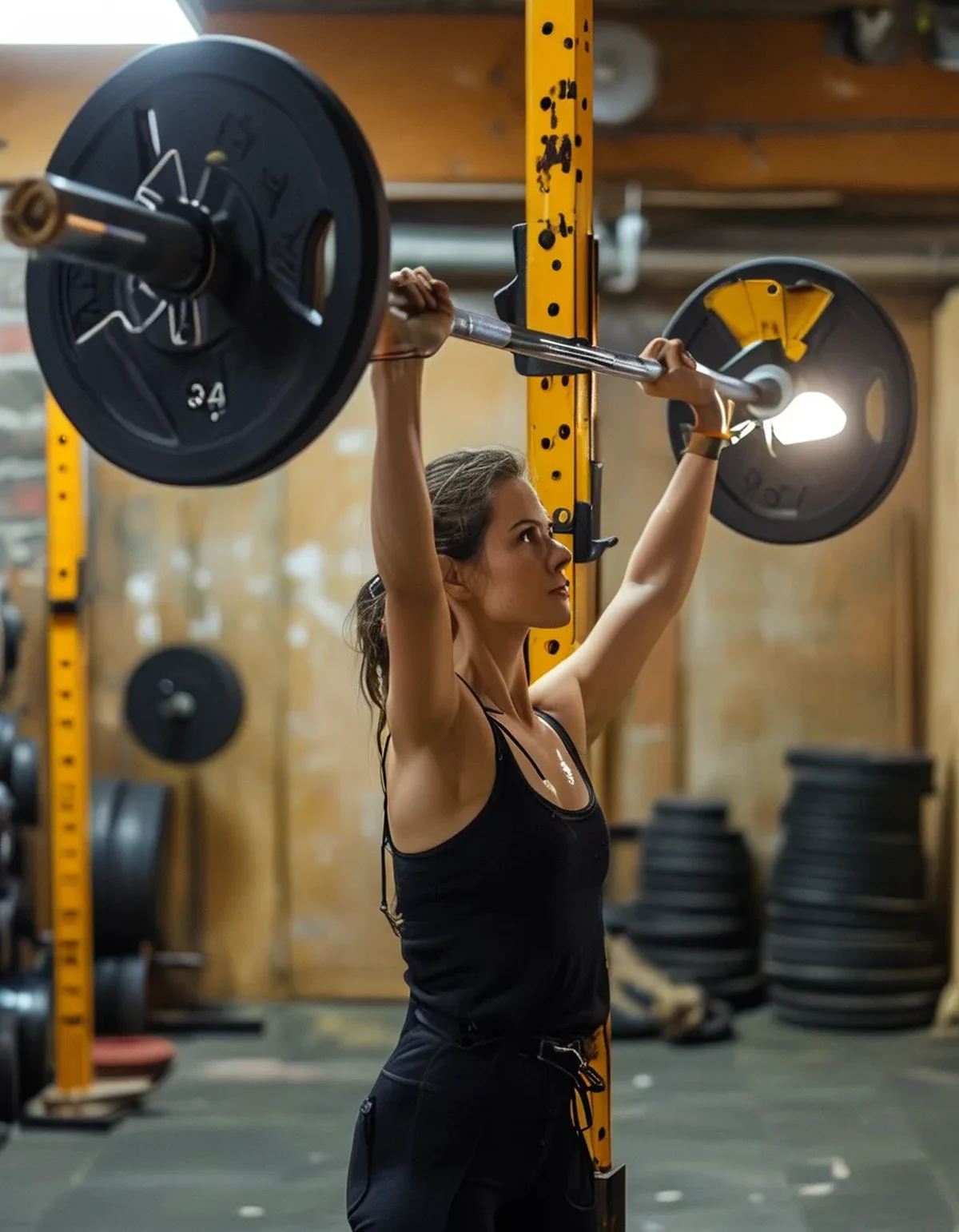
What are the actual risk scenarios, ranked?
Five, and they are not equally likely or equally serious.
1. Failing a barbell bench press with no safeties. This is the highest-consequence scenario in any home gym and the one with a real history of fatalities. A loaded bar across the chest or throat with nobody in the house is the situation every other decision in this guide is designed to avoid.
2. Failing a squat with no safeties or with safeties set wrong. Slightly less dangerous than the bench because you can usually dump the bar backward if you have practiced it, but only if you have practiced it and the rack allows it.
3. Dropping a heavy dumbbell or plate on a foot or hand. The most frequent home gym injury by a wide margin, and the least dramatic. Usually caused by fatigue at the end of a set, poor storage, or lifting plates with bad mechanics.
4. Equipment failure. Collapsing benches, racks that were never bolted or leveled, cheap collars slipping, and adjustable dumbbells coming apart mid-rep. Almost always preceded by visible wear that got ignored.
5. A non-lifting injury with no help available. Slipping on a mat, tripping over equipment, a head knock, or a cardiovascular event. Rare, and the reason the phone-in-reach rule exists.
Where to spend your attention: scenarios one and two are low-frequency and high-consequence, so they get engineered out entirely. Scenarios three and four are higher-frequency and lower-consequence, so they get managed by habit and maintenance.
How do you set up safeties correctly?
Height is everything, and most people set them too high or never adjust them between exercises.
For the bench press: safeties should sit just below the lowest point the bar reaches on your chest at full range — close enough that a failed rep lands on the pins rather than on you, high enough that you are not pressing from an inch above them. The test: lie on the bench with an empty bar, lower it to your chest, and set the pins one to two inches below that. Then verify by rolling out from under an empty bar resting on the pins. If you cannot get out, they are too high.
For the squat: set safeties just below the depth of your deepest rep. Then practice failing deliberately with an empty bar and then with a light load — squat down, sit onto the safeties, and step out. Doing this once, on purpose, when nothing is at stake, is what makes it automatic when something is.
Adjust between exercises, every time. The most common failure is safeties left at squat height during a bench session, where they are useless. Building the adjustment into your setup routine takes 15 seconds.
If you have no rack: the answer is not to bench heavy with a barbell. It is dumbbells, which you can drop to the sides, or a floor press, where range is limited and the floor is the safety. Both are legitimate training options rather than compromises, and neither requires equipment you do not have.
On collars: always use them for pressing and squatting. The trick of leaving a bench press bar uncollared so plates slide off in an emergency is real and is used, but it requires the bar to tip, which requires you to be capable of tipping it. Treat it as a last resort, not a substitute for safeties.
What should you change about exercise selection when training alone?
Substitute where the failure mode is dangerous, and keep everything else.
Swap when a failed rep traps you:
- Barbell bench press without a rack → dumbbell press or floor press
- Barbell back squat without safeties → goblet squat, split squat, front squat, or trap bar deadlift
- Overhead barbell press to failure → dumbbell press, or barbell press stopped a rep or two short
Keep everything where a failed rep simply ends the set: deadlifts, rows, hinges, carries, lunges, pull-ups, most machine and band work. If failure means putting the weight down, there is no safety problem to solve.
Leave a rep in reserve on compound lifts. Training one to two reps short of failure produces nearly all of the strength adaptation of training to failure, with substantially less fatigue and vastly less risk. In a solo setting this is not a compromise; the research on proximity to failure has been steadily converging on it being roughly equivalent for hypertrophy and better for recovery.
Reserve genuine maximal attempts for when someone is home. Testing a one-rep max is the single situation where a second person matters most, and it is easy to schedule around.
Unilateral work is underrated for solo training. Split squats, single-leg RDLs and single-arm presses load each side well with far lower absolute weights, which reduces the consequence of every failure mode on this list while still driving progress.
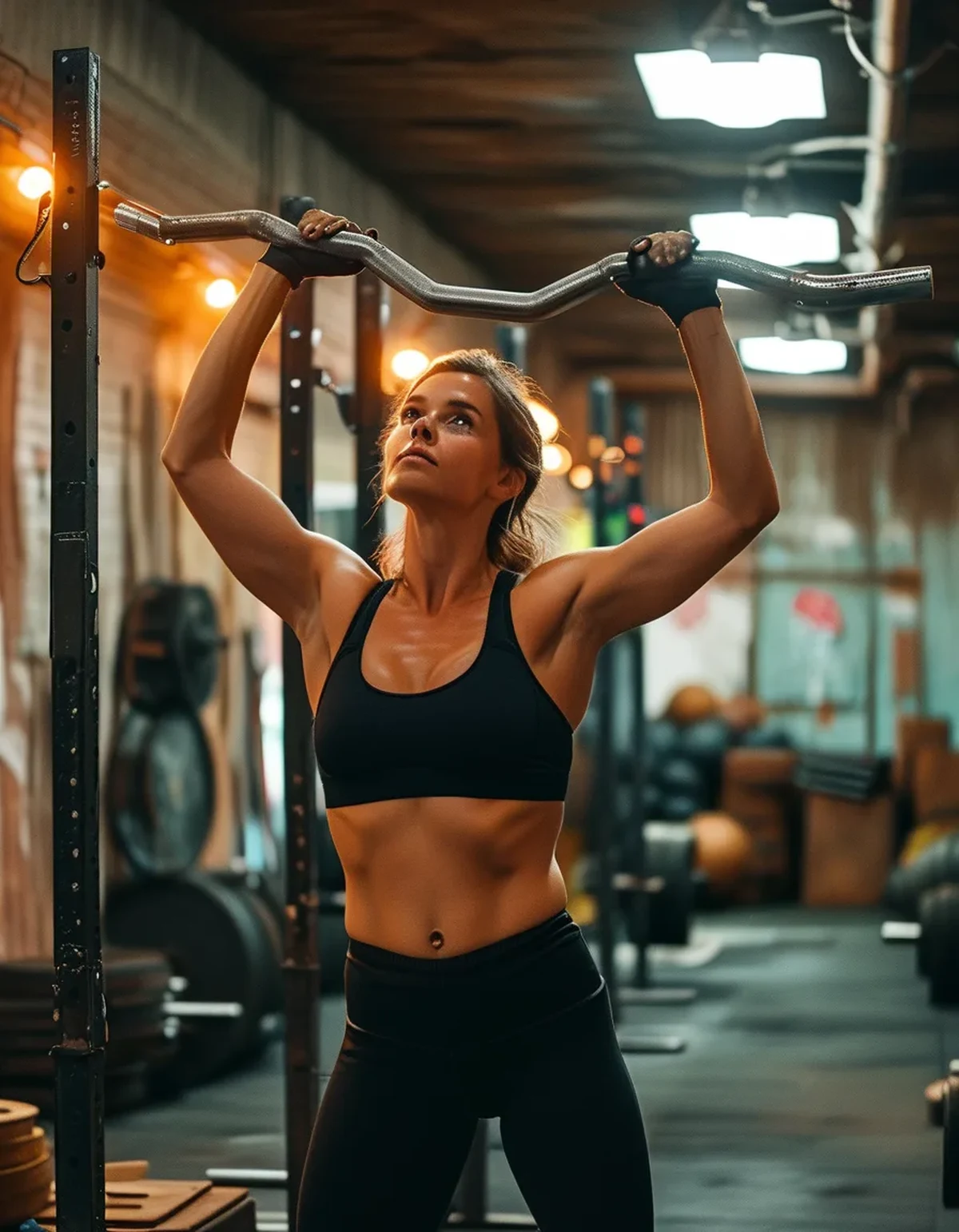
What does a safe home gym layout look like?
Six specifics, most of which cost nothing to fix.
Clear space around the lifting area. At minimum three feet on each side of a rack, and enough behind you to step back from a failed squat. The most common layout mistake is a rack pushed against a wall on one side, which removes an escape direction.
Everything stored off the floor. Plates on a tree or pegs, dumbbells on a rack, bars on a wall mount. Loose plates and dumbbells on the floor are the leading cause of the trip-and-fall category, and they are also what you land on if you do fall.
Flooring that absorbs and does not slip. Rubber mats of at least three-quarter inch under a lifting platform, and a surface that stays grippy when sweaty. Sealed concrete in a garage becomes genuinely slick with sweat, which is a real hazard in late summer.
Adequate lighting. Poor lighting causes missed footing and missed j-hooks. A garage with one dim bulb is worth fixing before any equipment upgrade.
Ceiling height checked with the bar overhead. Measure with the bar actually pressed overhead while standing on your platform, not from the floor. Basement gyms produce a steady supply of dented ceilings and, occasionally, dropped bars.
Ventilation and heat management. A closed garage in August can run 15 to 20 degrees above outdoor temperature, which meaningfully raises cardiovascular strain and dizziness risk. A fan and an open door is the minimum; training earlier in the day is better. If you feel lightheaded, stop — that is a signal, not a weakness.
Myth vs Fact: training alone
Myth: You cannot make real strength progress without a spotter.
Fact: A spotter is useful for maximal attempts and for confidence on the bench. For the 95 percent of training that happens at submaximal loads with reps in reserve, a spotter adds very little. Plenty of strong people have never trained with one.
Myth: Safety bars in a rack are only for beginners.
Fact: They are used by essentially every experienced solo lifter, and the stronger you get the more they matter, because the consequence of a failed rep scales with the load.
Myth: A phone with fall detection makes the rest unnecessary.
Fact: Automatic fall detection on a watch or phone is a genuinely useful backstop and it does not prevent anything. It is the last layer, not the first.
Myth: If something goes wrong I will just yell.
Fact: Pinned under a bar across the chest, most people cannot generate much volume, and a closed garage or basement absorbs sound. Do not build a plan around it.
Myth: Older equipment is fine as long as it has not broken yet.
Fact: Equipment failure is usually preceded by visible warning — frayed cables, cracked welds, worn bench padding compressing unevenly, loose bolts. A five-minute check once a month catches nearly all of it, and nobody does it because nothing has gone wrong yet, which is exactly the reasoning that precedes something going wrong.
What habits actually reduce risk day to day?
Five, and they take less than two minutes total per session.
1. Tell someone you are training. A text to a partner or friend saying starting a session, back in an hour costs five seconds and creates a person who will notice if you go quiet. This is the single highest-value habit on the list and the most commonly skipped.
2. Phone within arm’s reach of the platform, not on a shelf across the room. If you cannot reach it from where you would end up after the most likely accident, it is not accessible. A pocket, or the floor beside the rack.
3. A real warm-up, especially in cool weather. Cold tissue in an unheated garage in October is meaningfully less tolerant of a heavy first set. Five to ten minutes of general movement plus warm-up sets is not optional in a home gym where the ambient temperature is not controlled.
4. A 30-second equipment scan before you load. Collars on, pins seated, bench locked at the angle you want, j-hooks fully engaged, plates evenly loaded. This catches the small errors that produce the majority of minor injuries.
5. Stop when the quality goes. Nobody is watching, which cuts both ways — there is no social pressure to keep going, and there is also no one to tell you your form has fallen apart. Form degradation on the last set of a heavy day is where a lot of home gym injuries actually originate.
On training with children or pets in the house: a closed door or a physical barrier around the training area is not overcautious. Dropped weights and moving equipment are genuinely dangerous to anyone who wanders in, and the moment it matters is the moment you are least able to react.
FAQ: Solo Training Questions, Answered
Is a smart watch with fall detection worth it for home training?
As a backstop, yes. It is inexpensive insurance for the low-probability scenarios, particularly if you train when nobody else is home. It should not change any of your other decisions.
Can I bench safely with just a flat bench and no rack at all?
Not with a barbell to any meaningful load. Dumbbells solve this completely — you can drop them to the sides, and dumbbell pressing is arguably a better hypertrophy stimulus anyway. This is a case where the safe option is not a downgrade.
How often should I inspect equipment?
A quick visual check before each session and a real inspection monthly: bolts torqued, cables and straps examined, welds looked at, bench padding and hinges checked. Write it in a calendar or it will not happen.
What about training alone when I have been sick or slept badly?
Reduce the load and skip the near-limit work. Both illness and sleep deprivation impair coordination and force production, and a solo session is the wrong place to find out how much.
Should I keep a first aid kit in the gym?
Yes, and a basic one is enough — bandages, ice pack, antiseptic. If you have any medical condition that could produce an emergency, discuss a specific plan with your clinician rather than improvising. This is general information, not medical advice.
TL;DR:
- Set rack safeties just below your bottom position and adjust them between every exercise.
- Without a rack, press with dumbbells or from the floor — never barbell bench to failure.
- Leave one to two reps in reserve on compounds and save maximal attempts for when someone is home.
- Store everything off the floor, keep three feet clear around the rack, and fix the lighting before upgrading equipment.
- Text someone before you start and keep your phone within arm’s reach of the platform.
- Inspect equipment monthly; most failures give visible warning first.
Training alone is completely normal and completely manageable. The setup decisions are cheap, and they only have to be made once.
See It in Motion
Seen here: UPF 50+ Racerback Yoga Tank Top — shop it on bubblelime.com
Keep Reading
This article is for general informational and styling purposes only. Fit, sizing, and product availability may vary.