The Complete Guide to Home Gym Humidity, Rust, and Equipment Damage
Quick Answer: Rust forms when bare steel sits in air above roughly 60% relative humidity, and garages and basements routinely exceed that in late summer. The damage that matters most is not cosmetic surface rust on plates - it is barbell knurling filling in, bearings and bushings degrading, and cable and upholstery deterioration. Controlling humidity with a dehumidifier is far cheaper than replacing equipment, and a ten-minute weekly wipe-down prevents most of the rest.
You walk into the garage in late August, pick up the barbell, and the knurling has gone from sharp to slightly furry. It happened over about three weeks, and nothing obviously changed.

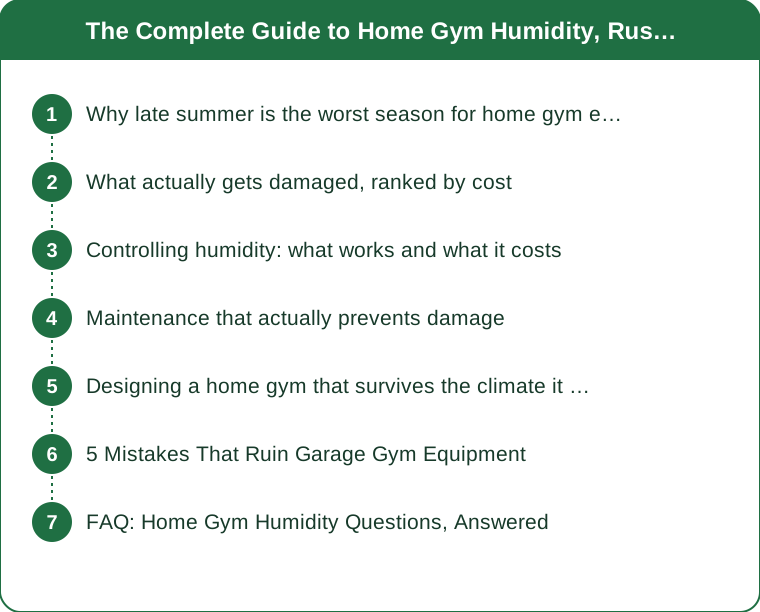
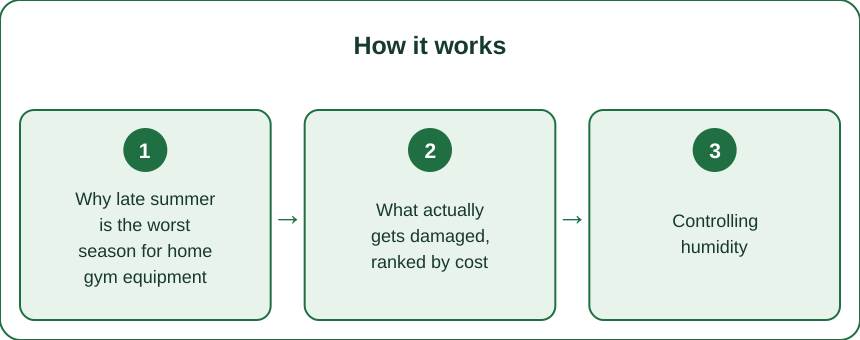
Why late summer is the worst season for home gym equipment
The mechanism is straightforward once you see it, and it explains why damage clusters in specific weeks.
The condensation problem
Warm air holds more moisture than cool air. When warm, humid outside air enters a cooler garage or basement, it cools and its relative humidity rises. If it cools enough to reach the dew point, moisture condenses onto surfaces - and the coolest surfaces in the room are usually the large metal objects.
This is why barbells and plates get wet in a room that never had water in it. A concrete floor and steel equipment stay cooler than the air, and they collect condensate first.
Late summer is peak season for this because outdoor absolute humidity is at its annual high while unconditioned spaces are still relatively cool, particularly overnight and in the early morning.
The threshold that matters
Corrosion of bare steel accelerates markedly above roughly 60% relative humidity and becomes rapid above 80%. Below about 50%, it is very slow. This threshold is the single most useful number in equipment care, because it converts a vague concern into a measurable target.
A cheap hygrometer is the highest-value purchase you can make for a garage or basement gym. It costs very little and it tells you whether you have a problem at all - many gyms are fine and their owners worry unnecessarily, while others are at 75% for weeks and nobody notices.
Why sweat compounds it
Sweat contains salt, and salt dramatically accelerates corrosion by increasing the conductivity of surface moisture. A barbell used and left unwiped in a humid garage corrodes far faster than an unused one in the same room. The knurling, which holds sweat in its grooves, is the first place it shows.
Chalk holds moisture too. Chalk residue in knurling absorbs and retains humidity against the steel, which is why heavily used bars in humid environments deteriorate faster at the grip points than elsewhere.
What actually gets damaged, ranked by cost
Not all corrosion matters equally, and knowing the hierarchy prevents both panic and neglect.
Barbells: the expensive one
Knurling is the real loss. Surface rust on a bar shaft is largely cosmetic and cleans off. Rust that fills and rounds the knurling changes the grip permanently, and no cleaning restores a sharp knurl once it has corroded away.
Bearings and bushings in the sleeves are worse still, because they are not easily inspected. Moisture penetrating the sleeve assembly degrades the rotation that makes a bar usable for Olympic lifting, and repair usually means disassembly or replacement.
Bar finish determines vulnerability. Bare steel bars corrode fastest and need the most care. Black oxide offers modest protection. Zinc and chrome offer more. Stainless steel and Cerakote are the most resistant, though even stainless is not immune in a genuinely wet environment.
Machines, cables, and moving parts
Cables and pulleys deteriorate silently and fail suddenly. A frayed cable under load is a genuine safety issue, not just a maintenance one. Inspect cables at least seasonally and immediately replace any showing broken strands.
Guide rods on smith machines and functional trainers rust and then bind, which makes movement rough and accelerates further wear.
Upholstery is the most commonly ruined item in damp basements. Vinyl and foam benches in persistent high humidity develop mould, and once mould is established in foam it is very difficult to remove.
Plates and the things that barely matter
Cast iron plates rust cosmetically and function indefinitely. Surface rust on plates is unattractive and gets on your hands and clothes, but it does not meaningfully affect their usefulness. This is where most people direct their worry and least of their actual risk lies.
Bumper plates are unaffected by humidity except at the steel insert, which is worth a glance occasionally.
Rubber and foam flooring traps moisture underneath it, which is a genuine and frequently overlooked problem in basements - the concrete beneath can stay damp indefinitely, encouraging mould under mats that look fine on top.
Controlling humidity: what works and what it costs
In descending order of effectiveness for the money.
A dehumidifier
This is the answer for most damp garages and basements. A unit sized for the space, set to maintain 50% relative humidity, running through the humid months, solves the problem at its source rather than managing symptoms.
Practical notes: compressor dehumidifiers lose efficiency in cold conditions, which matters in an unheated garage in winter but not in late summer. Continuous drainage to a floor drain removes the need to empty a tank, and a unit with a built-in humidistat runs only when needed rather than continuously.
Running cost is real but modest, and it is dramatically lower than replacing a barbell, let alone a cable machine.
Ventilation and air movement
Air movement alone helps considerably by preventing the still, saturated microclimate that forms around cool metal surfaces. A fan running in a garage gym does useful work for very little money.
But ventilation with humid outside air can make things worse. Opening a garage door on a humid morning brings in moisture-laden air that then condenses on cool equipment. Ventilate when outside air is drier than inside, which usually means afternoons rather than mornings.
Insulation and sealing
Uninsulated garages have large surface temperature swings, which is precisely what drives condensation. Insulating a garage is expensive relative to a dehumidifier but it addresses several problems at once, including making the space usable year-round.
Sealing a concrete floor reduces moisture migrating up through the slab, which is a significant and invisible source in basements and slab-on-grade garages.
The cheap measures that still help
Desiccant packs in enclosed storage - toolboxes, drawers, and cases holding small metal items - work well in confined volumes even though they are useless for a whole room.
Getting equipment off the floor onto racks and stands removes it from the coolest, dampest layer of air and from direct contact with a potentially damp slab.
Covers are a mixed blessing. A cover over a machine in a humid room can trap moisture against it rather than protecting it. Covers make sense in dusty, dry environments and often make things worse in damp ones.

Maintenance that actually prevents damage
A short, repeatable routine beats occasional deep cleaning.
After every session, two minutes
Wipe the bar down, particularly the knurling and anywhere you gripped. A dry cloth is enough most of the time; sweat left overnight in a humid garage is the single most damaging routine habit.
Wipe sweat off bench upholstery and machine pads. Sweat degrades vinyl over time and salt accelerates corrosion of any exposed metal beneath.
Weekly, ten minutes
Brush the knurling with a nylon brush to remove chalk and residue that holds moisture. A brass or nylon brush is right; a steel brush is too aggressive for most finishes.
Check the hygrometer and note the reading. Patterns matter more than single readings, and a week above 65% is a signal to act.
Look at cables and pulleys if you have them. Ten seconds of inspection prevents the failure that matters most.
Monthly to seasonally
Light oil on bare steel bars. A thin coat of a light machine oil or a purpose-made bar oil, wiped on and mostly wiped off, provides meaningful protection. Too much oil attracts dust and makes the bar unpleasant to use.
Rotate bar storage. Bars stored horizontally on a rack in contact with the same points develop wear and corrosion at those contact points. Vertical storage in a proper holder avoids this entirely and takes less space.
Check plates and racks for surface rust and address it before it spreads. A wire brush, a wipe, and a light protective coat handles cast iron easily at this stage.
Dealing with rust that has already formed
Light surface rust on a bar comes off with a nylon or brass brush and a light oil, working along the knurling rather than across it. This is routine maintenance, not a repair.
Heavier rust may need a fine abrasive pad and oil. Be aware that aggressive abrasion removes finish, which leaves the underlying steel more vulnerable in future.
Rust that has rounded the knurling is permanent. No treatment restores it. This is why prevention matters more here than anywhere else in the gym.
Designing a home gym that survives the climate it lives in
Decisions made at setup determine how much maintenance the space demands forever.
Choosing equipment for the environment
If your space is genuinely damp and you cannot fix it, buy for corrosion resistance. Stainless steel or Cerakote bars cost more up front and are the correct choice for a coastal garage or a persistently damp basement. Bare steel in that environment is a slow, ongoing loss.
Prefer bumper plates over cast iron in damp spaces, or accept that cast iron will develop surface rust and that this is largely cosmetic.
Avoid fabric and foam where you can. Upholstered benches in damp basements are a recurring replacement cost. Where you need them, choose good-quality vinyl and wipe them down consistently.
Location within the building
Basements are cooler and damper; garages swing more in temperature. Each has a characteristic problem - basements have persistent moisture, garages have condensation events. A spare room inside the conditioned envelope of the house avoids both entirely and is worth considering even at the cost of space.
Slab floors are a moisture source. A vapour barrier or sealed floor under any flooring you install prevents a slow problem that is very hard to fix later.
Budgeting for the environment
A dehumidifier belongs in the initial equipment budget for any garage or basement gym, alongside the rack and the bar. Treating it as an optional accessory is how people end up paying for it twice.
A hygrometer costs almost nothing and should be the first purchase. You cannot manage what you are not measuring, and many people discover their space is fine, which is also useful information.
The long view
Equipment maintained consistently lasts decades. Barbells, racks, and plates are effectively permanent purchases when the environment is controlled. The same equipment in an uncontrolled damp space has a lifespan measured in years.
The cost comparison is stark. A dehumidifier and a few hours of maintenance a year against replacing a bar, resurfacing a machine, or dealing with mould in a basement. It is one of the clearest maintenance-versus-replacement calculations in the whole home gym question.
5 Mistakes That Ruin Garage Gym Equipment
1. Leaving the bar unwiped after a session. Sweat is salty, salt accelerates corrosion, and knurling holds it in place against the steel. This is the fastest route to a ruined grip and it takes thirty seconds to prevent.
2. Ventilating at the wrong time of day. Opening the garage on a humid morning brings in air that condenses on your equipment. Ventilate in the afternoon when outside air is drier, or use a dehumidifier and keep it closed.
3. Storing bars horizontally in contact with a rack. Contact points hold moisture and wear the finish at exactly the same spots. Vertical storage costs nothing and eliminates the problem.
4. Covering equipment in a damp room. A cover in a humid environment traps moisture against the surface it was meant to protect. Covers are for dust in dry spaces, not for moisture in wet ones.
5. Over-oiling the bar. People who discover the oiling advice frequently overdo it, producing a bar that attracts dust, transfers to hands and clothing, and grips poorly. A thin film, mostly wiped off, is the target - the bar should not feel oily.
And the bonus everyone misses: rubber flooring laid directly on an unsealed concrete slab traps moisture underneath, where it stays damp indefinitely and grows mould you will not find until you lift the mats. Seal the slab or use a vapour barrier before laying flooring.
FAQ: Home Gym Humidity Questions, Answered
What humidity level is safe for gym equipment?
Below about 50% relative humidity, corrosion of bare steel is very slow. Above 60% it accelerates noticeably, and above 80% it becomes rapid. Setting a dehumidifier to hold 50% is a reasonable target for a garage or basement gym.
Will surface rust on my plates affect my training?
No. Surface rust on cast iron plates is cosmetic and does not affect their function or safety. It is unattractive and transfers to hands and clothing, but it is the least consequential corrosion in a home gym.
Is it worth buying a stainless steel barbell for a damp garage?
If the space is genuinely damp and you cannot control the humidity, yes. The price premium is substantially less than replacing a corroded bare steel bar, and knurling damage from rust is permanent.
How often should I oil my barbell?
In a controlled environment, every few months is ample. In a damp garage during humid months, monthly is reasonable. Use a light oil, apply thinly, and wipe most of it off - an oily bar is a badly maintained bar, not a well-protected one.
Do dehumidifiers actually work in an unheated garage?
Compressor dehumidifiers lose efficiency as temperatures fall, which matters in winter. During humid late-summer months, when garage temperatures are moderate, they work well. Desiccant dehumidifiers perform better in cold conditions if year-round use matters.
Should I cover my equipment when not in use?
In a damp space, generally no - covers trap moisture against surfaces. In a dry, dusty space such as a workshop garage, covers are useful. Match the decision to which problem you actually have.
TL;DR:
- Corrosion accelerates above about 60% relative humidity, and late summer routinely pushes garages and basements past it.
- Knurling, bearings, and cables are the damage that matters; surface rust on plates is cosmetic.
- A hygrometer is the cheapest useful purchase, and a dehumidifier set to 50% solves the problem at source.
- Wipe the bar after every session - sweat is salty and salt is what actually destroys knurling.
- Store bars vertically, ventilate in the afternoon rather than the morning, and never lay flooring on an unsealed slab.
The equipment did not wear out. It sat in air above 60% humidity for three weeks in August, with your sweat still on it.
See It in Motion
Seen here: UPF 50+ Short Sleeve Rashguard Swim Shirt — shop it on bubblelime.com
Keep Reading
This article is for general informational and styling purposes only. Fit, sizing, and product availability may vary.