The Complete Guide to Building a Home Gym That Actually Gets Used
Quick Answer: A home gym that actually gets used is built around minimizing friction to start a workout — visible equipment, a dedicated space (even small), and a small effective equipment set beats an expensive, cluttered setup that requires setup time before every session.
The treadmill under the clothes rack. The dumbbells in the closet you have to dig for. Most abandoned home gyms didn’t fail because of bad equipment — they failed because using them took too much effort to start.

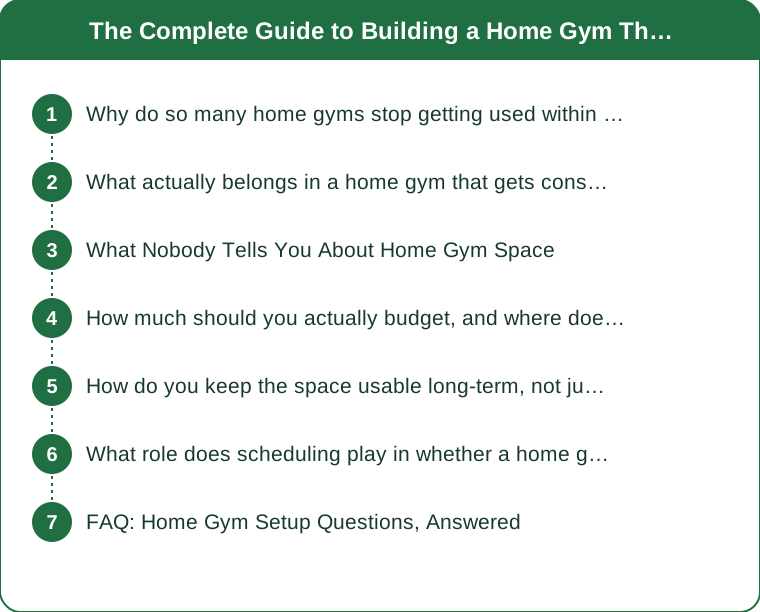
Why do so many home gyms stop getting used within months?
Because friction to start is the biggest predictor of workout consistency, and equipment that’s stored away, buried, or requires setup time adds exactly the kind of friction that kills a habit before it forms.
Research on habit formation consistently shows that removing small barriers to starting matters more than motivation — a visible, ready-to-use setup gets used far more than a technically better one that’s inconvenient to access.
Overbuying is the second major cause: a garage full of specialized equipment for every possible goal creates decision fatigue before a workout even starts, whereas a smaller, focused setup makes the choice of what to do simple.
What actually belongs in a home gym that gets consistently used?
A small core set — adjustable dumbbells, a pull-up bar, a bench, and resistance bands — covers the vast majority of effective strength training without the cost or space demands of machine-based setups.
For cardio, one versatile option (a jump rope, a compact bike, or just space to do bodyweight intervals) is more sustainable than an expensive treadmill that becomes a clothes rack the moment it’s inconvenient to use.
The guiding principle: buy equipment for the workouts you’ll actually do 3+ times a week, not the aspirational full-gym setup you might use twice before losing interest.
What Nobody Tells You About Home Gym Space
A dedicated 6x6 foot space, even a corner of a bedroom, outperforms a bigger but shared or repurposed space — a home gym that has to be set up and broken down each time (like gear stored under a bed) faces the same friction problem as no equipment at all.
Another rarely mentioned factor: visibility matters as much as accessibility — equipment you walk past daily gets used more than equipment in a closed closet or separate room you have to remember exists.

How much should you actually budget, and where does the money matter most?
Adjustable dumbbells (roughly $200-400 for a solid pair) typically deliver more usable training value than any single machine, since they cover a huge range of exercises in a small footprint.
A pull-up bar ($30-60) and a set of resistance bands ($20-40) round out a genuinely capable strength setup for well under $500 total — spending significantly more doesn’t reliably translate to more consistent use, and often does the opposite by adding complexity.
How do you keep the space usable long-term, not just at setup?
A simple weekly reset — putting equipment back in its visible spot, wiping down mats — prevents the slow clutter creep that turns a functional space back into storage over a few months.
Revisiting the setup every few months and removing anything that hasn’t been used in 4-6 weeks keeps the space focused on what you’re actually doing, rather than accumulating untouched purchases.
What role does scheduling play in whether a home gym gets used?
Treating home workouts as fixed calendar appointments, the same way a gym class would be, closes a large part of the gap between owning equipment and actually using it consistently.
Home workouts are uniquely vulnerable to being deprioritized because there’s no commute, class time, or other people creating external accountability — building in your own structure (a set time, a simple weekly plan) replaces that missing external pressure.
FAQ: Home Gym Setup Questions, Answered
Is it worth buying a squat rack for a home gym?
Only if you’re consistently doing barbell training and have the space and budget for it — for most people, adjustable dumbbells and bodyweight progressions cover strength goals without the cost and space demands of a full rack.
How small can a functional home gym space actually be?
A 6x6 foot area is enough for dumbbells, a mat, and bodyweight movements — space becomes a real constraint mainly if you’re doing barbell work that needs more clearance.
Should I buy all the equipment at once or build up gradually?
Gradually is generally better — starting with 2-3 versatile pieces and using them consistently for a month before adding more avoids the overbuying and clutter problem that derails many home gyms early on.
TL;DR:
- Friction to start, not equipment quality, is the biggest reason home gyms stop getting used
- A small, focused equipment set beats an expensive, cluttered setup for actual consistency
- Visible, dedicated space matters more than a bigger but hidden or shared space
- Treating home workouts as fixed calendar appointments closes the accountability gap
- Review and reset the space every few months to prevent slow clutter creep
Before buying anything else, make sure what you already own is visible and ready to use — that single change often matters more than any new purchase.
See It in Motion
Seen here: Yoga Jogger Sweatpants with Pockets — shop it on bubblelime.com
Keep Reading
This article is for general informational and styling purposes only. Fit, sizing, and product availability may vary.