The Complete Guide to Building a Home Gym in Phases Instead of All at Once
Quick Answer: Building a home gym in three phases — starting with a mat, resistance bands, and adjustable dumbbells, then adding a bench and pull-up bar once those first tools are used consistently for 6-8 weeks, then finally larger equipment like a rack or cardio machine — prevents the common pattern of buying everything upfront and using a fraction of it.
A home gym built in one weekend, with every piece of equipment purchased at once, is one of the most reliable ways to end up with a room full of gear that gets used for a month and then mostly ignored.

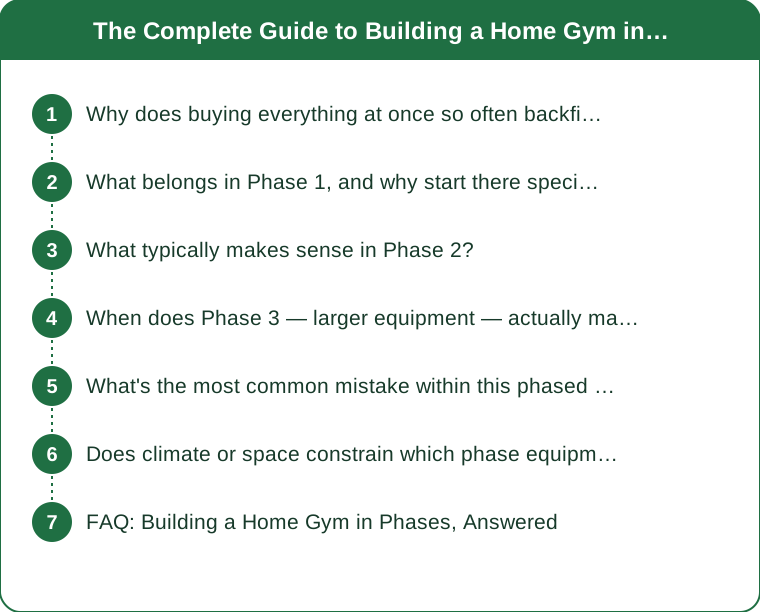
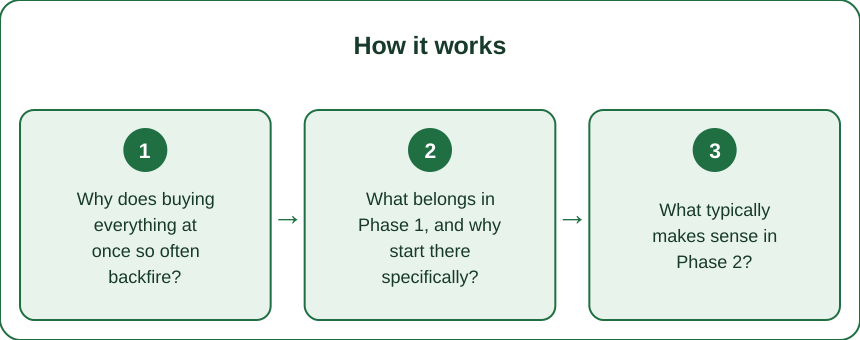
Why does buying everything at once so often backfire?
Motivation at the start of a new home gym project is usually higher than the habit that will eventually sustain it, which leads to overestimating how much variety and equipment will actually get used regularly. Spreading purchases over phases, tied to actual usage data rather than initial enthusiasm, produces a much more accurate final equipment list — and usually a smaller, cheaper one.
What belongs in Phase 1, and why start there specifically?
A mat, a set of resistance bands, and adjustable dumbbells cover the vast majority of strength and mobility training needs on their own, take up minimal space, and cost a fraction of a full setup. Phase 1’s real purpose isn’t just training — it’s generating real usage data about which days, times, and workout styles actually get used, which directly informs Phase 2 decisions. A reasonable checkpoint before moving on is 6-8 weeks of consistent use — long enough to move past initial-motivation usage patterns and into a more honest, sustained routine, but not so long that momentum toward expanding the setup is lost entirely.
What typically makes sense in Phase 2?
Once Phase 1 equipment has proven consistent use, a bench and a pull-up bar are common next additions, since they meaningfully expand exercise variety without requiring the space or budget commitment of larger machines — and by this point, the specific gaps in Phase 1’s routine (upper body pulling, incline work) are usually clear from actual experience rather than guesswork.

When does Phase 3 — larger equipment — actually make sense?
Phase 3 (a squat rack, barbell setup, or dedicated cardio machine) makes sense only once Phase 1 and 2 equipment show sustained, near-daily or near-weekly use over a couple of months, and the specific limitation of the current setup (needing heavier loading, needing steady-state cardio) is clearly identified through actual training rather than assumed in advance.
What’s the most common mistake within this phased approach itself?
Skipping straight to Phase 3 equipment because it seems more “serious” or gym-like is the most common shortcut people take, and it’s also the most expensive mistake — a squat rack purchased before consistent use of basic equipment is established is disproportionately likely to become the same underused gear the phased approach was designed to avoid.
Does climate or space constrain which phase equipment is realistic?
Yes — garage and basement setups need climate consideration (temperature extremes affect both comfort and equipment longevity, particularly rubber and metal components) before Phase 2 or 3 equipment is added, since larger gear represents a bigger investment that’s more exposed to those conditions over time than a mat and a set of bands.
FAQ: Building a Home Gym in Phases, Answered
What’s a reasonable Phase 1 budget?
A mat, a set of resistance bands, and a pair of adjustable dumbbells can typically be assembled for well under $200, which keeps the initial investment low while the actual usage pattern is still being established.
Is it wasteful to buy adjustable dumbbells instead of a full fixed-weight rack from the start?
No — adjustable dumbbells cover a wide range of the load progression most people need in Phase 1 and take up a fraction of the space and budget of a full rack, which can always be added later if genuinely needed.
What if Phase 1 equipment ends up barely used?
That’s useful information, not a failure — it usually means the home gym concept itself needs a different approach (accountability, class-style content, a different time of day) before more equipment is the right next step.
TL;DR:
- Buying all equipment upfront overestimates how much variety will actually get used
- Phase 1 (mat, bands, adjustable dumbbells) generates real usage data cheaply and quickly
- Phase 2 (bench, pull-up bar) should follow 6-8 weeks of consistent Phase 1 use
- Phase 3 (rack, barbell, cardio machine) only makes sense once a specific, proven gap exists
- Skipping to “serious” equipment early is the most expensive version of this mistake
The home gyms that actually get used long-term are almost always built in stages that follow real habits — not assembled in a single ambitious weekend.
See It in Motion
Seen here: Yoga Jogger Sweatpants with Pockets — shop it on bubblelime.com
Keep Reading
This article is for general informational and styling purposes only. Fit, sizing, and product availability may vary.