A Realistic 12-Month Plan for Building a Home Gym Without Blowing Your Budget
Quick Answer: Spread home gym purchases across three phases over a year — foundational equipment first (months 1-3), targeted additions based on what you actually use (months 4-8), and specialty or upgrade pieces last (months 9-12) — rather than buying everything upfront, which is the most common reason gear ends up unused.
Most abandoned home gym equipment wasn’t a bad purchase in theory — it was purchased too early, before real usage patterns showed what was actually needed. A phased approach fixes that by letting your actual habits guide each purchase.
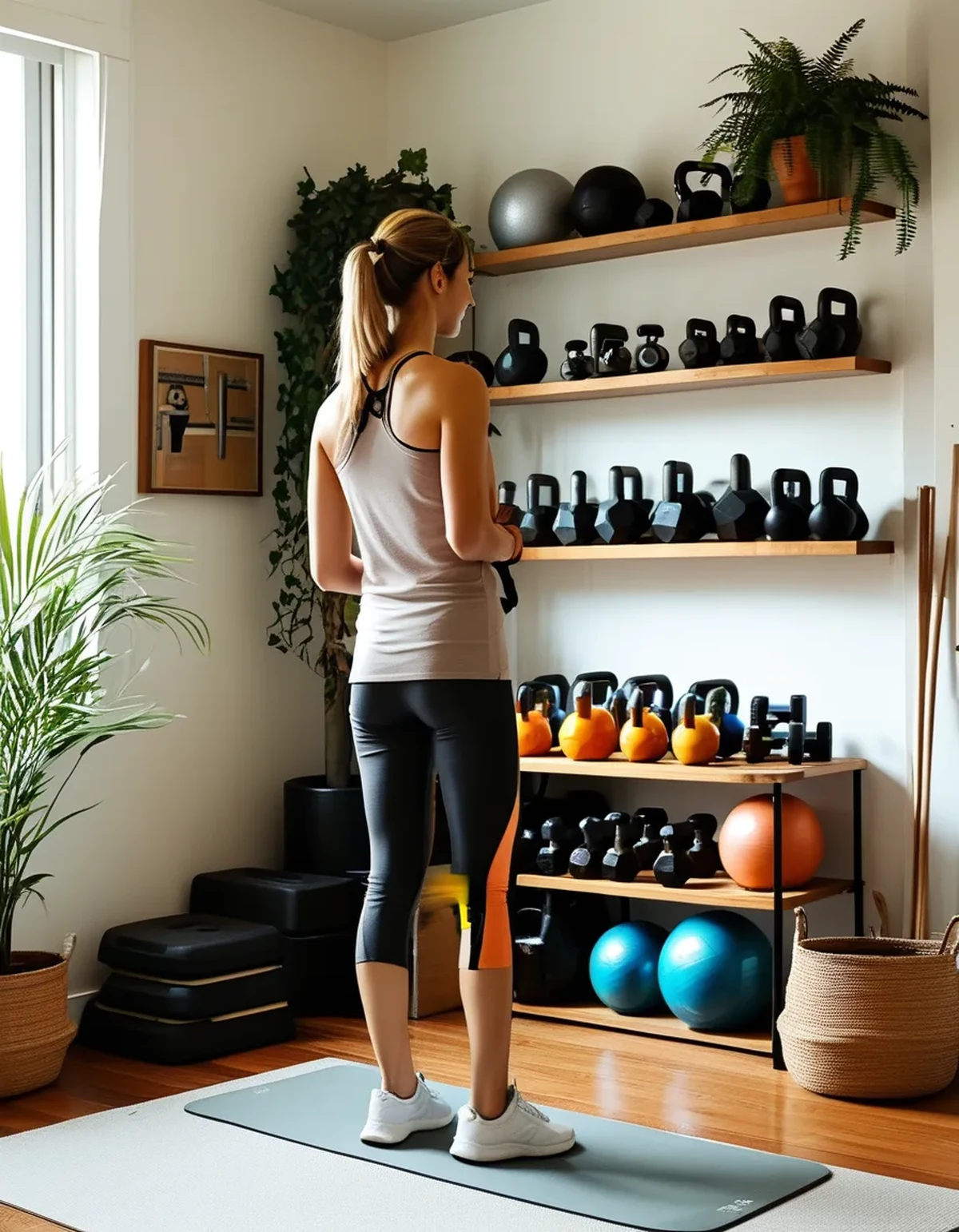
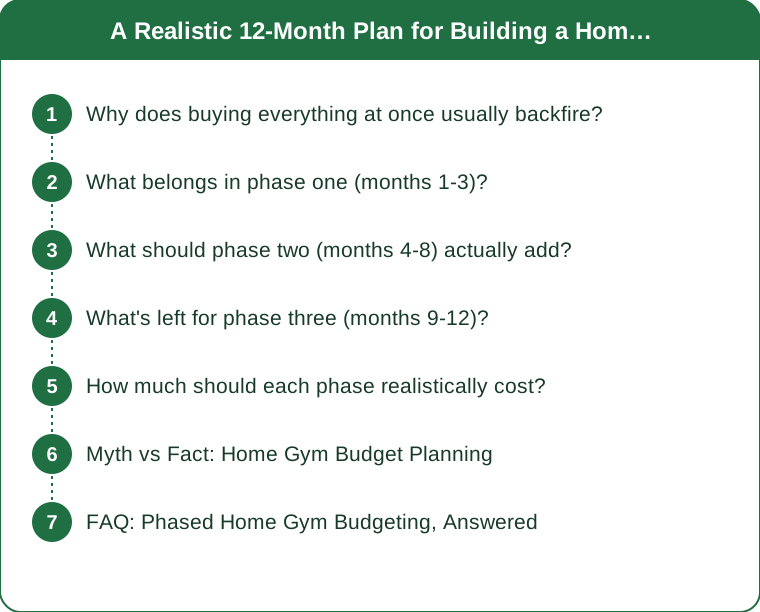
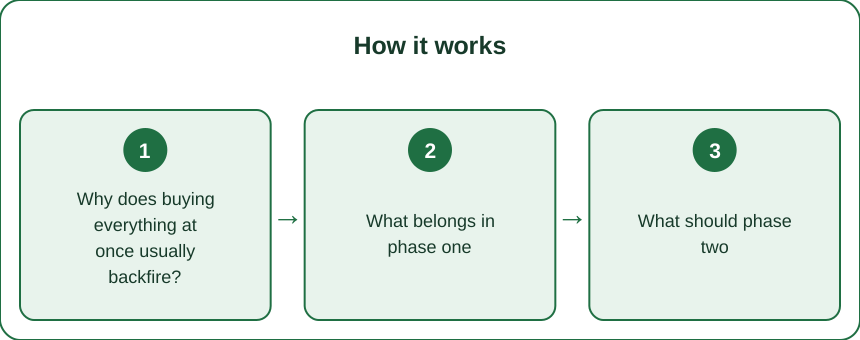
Why does buying everything at once usually backfire?
Front-loading a home gym purchase means guessing at your future habits before you have any real data on them. Research on gym equipment abandonment (and plenty of anecdotal evidence from resale marketplaces) points to the same pattern: equipment bought speculatively, before a consistent habit existed, is the most likely to go unused. Spacing purchases out lets each one respond to an actual, observed need rather than a guess about what a workout routine ‘should’ include.
There’s also a financial benefit — spreading a $1,500-2,500 full setup across 12 months in three phases is far easier to absorb than one large upfront cost, and it leaves room to redirect the budget if phase one reveals you actually prefer a different type of training than expected.
What belongs in phase one (months 1-3)?
Phase one should cover the highest-versatility, lowest-cost items: a set of adjustable dumbbells or a modest fixed set, a mat, and a doorway pull-up bar or resistance bands. This core covers full-body strength training across dozens of possible programs without committing to a specific training style yet.
The goal of phase one isn’t a complete gym — it’s building a consistent 3+ session per week habit with minimal equipment, so that phases two and three can be guided by real usage instead of speculation. Most people can build phase one for well under $300.
What should phase two (months 4-8) actually add?
By month four, patterns should be visible: which movements you gravitate toward, which are limited by current equipment, and which class or style videos you keep returning to. Phase two additions should target specific bottlenecks you’ve actually hit — a bench if you keep wanting to press, a heavier kettlebell if dumbbells have become too light, a stability ball if balance work keeps coming up.
This is also the point to reconsider flooring and space setup if noise or joint comfort has become a real issue during phase one, since by now you’ll know which movements actually get used regularly enough to justify a flooring investment.
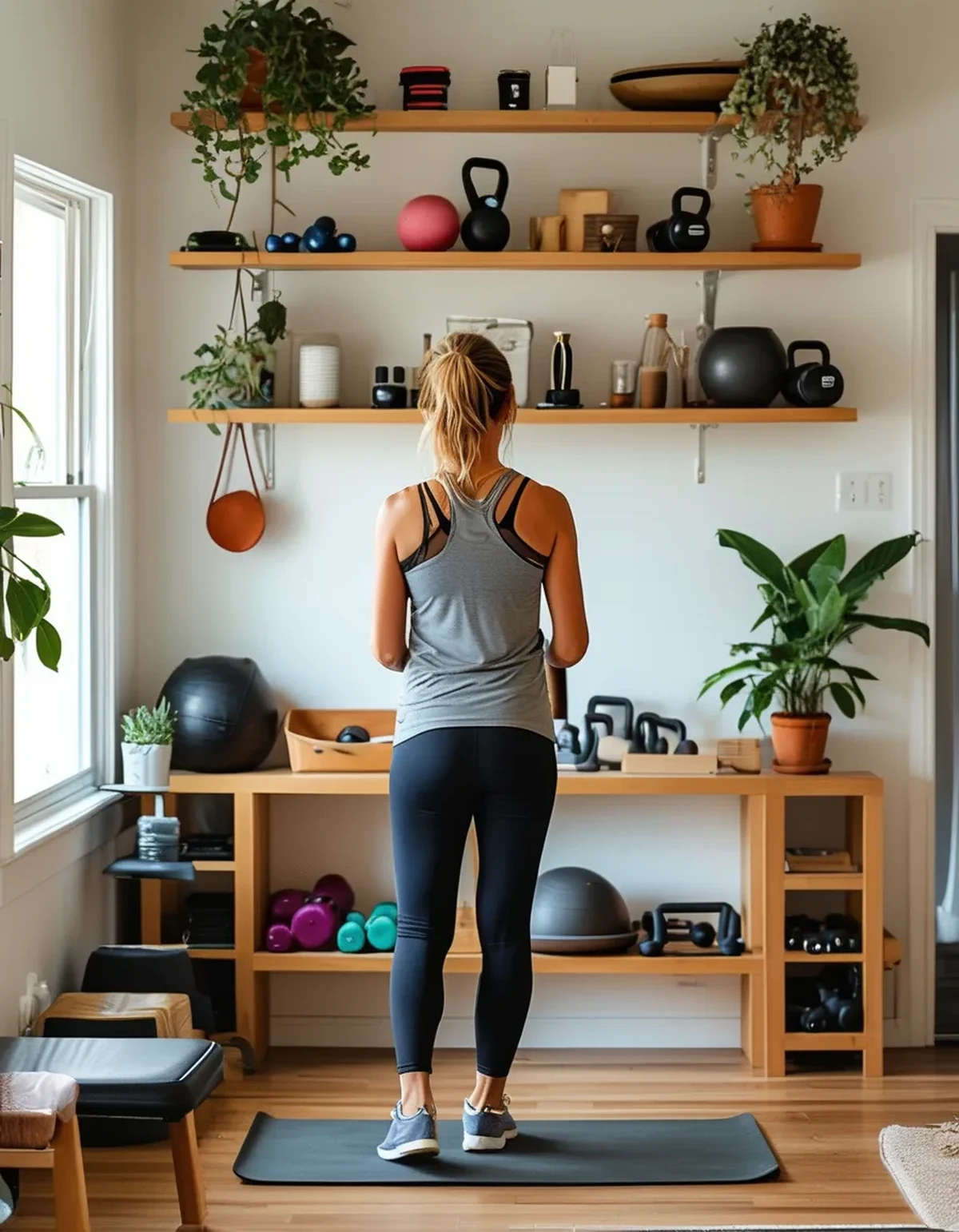
What’s left for phase three (months 9-12)?
Phase three is for genuine upgrades and specialty equipment — a rack if you’re consistently loading a barbell, a rower or bike if cardio has become a real fixture, or higher-end versions of gear you’ve been using consistently for months. By this point, a full year of real usage data removes almost all the guesswork that leads to unused equipment.
This is also a reasonable time to sell or repurpose anything from phase one or two that genuinely never got used — a 12-month vantage point makes those calls much clearer than they were at month one.
How much should each phase realistically cost?
As a rough guide: phase one $150-300, phase two $300-600 depending on what bottlenecks show up, and phase three $400-1,000+ depending on whether a rack or cardio machine enters the picture. Total ends up comparable to buying everything at once, but spread out and — critically — informed by real use rather than speculation, which measurably reduces the odds of buying something that becomes a clothes rack.
Myth vs Fact: Home Gym Budget Planning
Myth: Buying a complete setup on day one saves money in the long run. Fact: Unused equipment from over-buying is a bigger financial loss than the marginal cost of spreading purchases over time.
Myth: A home gym isn’t ‘real’ until it has a rack and barbell. Fact: A phase-one setup of dumbbells, a mat, and bands supports a complete, effective strength program for months before more equipment becomes genuinely necessary.
FAQ: Phased Home Gym Budgeting, Answered
What if I already own a bunch of equipment I bought too early?
Assess what’s actually gotten used in the last month — anything untouched for 4+ weeks is a candidate to sell or store, and the funds can go toward equipment that matches your now-established phase-one habits.
Should I skip phase one if I already work out consistently elsewhere?
An established habit is a legitimate reason to move faster, but it’s still worth a short phase one to confirm which home-specific equipment actually gets used versus what you assume you’ll use.
Is renting or borrowing equipment a reasonable alternative to buying in phase two or three?
For expensive, infrequently used items (a rower, a rack), a short-term rental or a fitness-equipment resale marketplace purchase can validate real usage before committing to a full retail purchase.
TL;DR:
- Buying everything upfront is a top cause of unused home gym equipment
- Phase one: dumbbells, mat, bands — build the habit first, under $300
- Phase two: fill in bottlenecks your actual usage reveals
- Phase three: upgrades and specialty gear once a full year of real data exists
Letting real usage guide each purchase avoids the most common and expensive home gym mistake.
See It in Motion
Seen here: Super High Waist Embossed Yoga Leggings with Inner Pocket — shop it on bubblelime.com
Keep Reading
This article is for general informational and styling purposes only. Fit, sizing, and product availability may vary.